

The Foundation Planting Mistake I See Everywhere (And How to Fix It)
I walk by so many beautiful houses in my neighborhood, and they all have one thing in common… they’re doing one thing wrong.
They’ve got these huge arborvitae planted right along the foundation—so big now they’re blocking windows and creeping higher every year until they’re practically as tall as the house. And I get it. Arborvitae feel like the “easy button” because they’re green, they look tidy, and they make everything feel private.
But when they’re planted in the wrong spot? They don’t make the house look nicer. They make the house look smaller… darker… and kind of swallowed.
Here’s the mistake in plain English: arborvitae are screening plants, not foundation plants. They’re amazing when you want privacy along a property line or to block a view. But right under your windows? They turn into a green wall—fast.
And the fix isn’t complicated or expensive. It’s not even about having a “better eye for landscaping.” It’s about following a few simple height rules so your foundation planting looks polished and your windows can actually do their job.
The items listed are accompanied by affiliate links, meaning I earn a small commission if a purchase is made through my links. This has no impact on the cost to the consumer. I link to products this way whenever possible, and it has no bearing on the products I choose to review or recommend.
Table of Contents Hide
Why This Mistake Happens
If you’ve planted something too tall along the front of your house, you’re not alone. This is one of those landscaping problems that sneaks up on you.
You plant a few shrubs. They look great. You feel proud. Your bed looks “done.”
Then a couple years go by, the shrubs hit their growth spurt, and suddenly you’re out there with pruning shears trying to reclaim your windows like you’re cutting your way through the jungle.
A lot of it comes down to two things:
We buy plants based on what they look like today.
Garden center labels make “fast-growing” sound like a bonus.
Fast-growing is only a bonus if the plant is in the right spot. Under windows, it usually becomes a chore.
So instead of guessing, here’s the rule that makes this easy.
The 10-Second Fix: Use Your Window Sill as the Height Limit
Before you buy a single plant, go stand in your yard and look at your windows.
You don’t need to measure with a tape measure (unless you want to). You just need to notice one line:
The window sill line — the bottom of the window.
That sill line is your built-in guide for foundation plants.
Here’s the simple rule:
Any plant directly under a window should mature below the window sill.
Ideally, it should land around one-third to one-half the height of the window.
That’s it. That one guideline will prevent 90% of the “my shrubs are eating my house” situations.
If you want a quick mental shortcut:
If your window is about 4 feet tall, under-window plants should mature around 16–24 inches.
Anything that wants to be 4–6–8 feet tall is not an under-window plant. That’s a “corner” plant or a “screening” plant.
The Simple Height Rules
Once you understand the window sill rule, the rest becomes almost automatic.
Rule 1: Under windows, aim for 1/3 to 1/2 the window height
This is the sweet spot where the planting looks full and intentional, but your house still feels bright and open.
Rule 2: The absolute max under a window is the window sill
If a shrub matures above the sill, you’re either committing to constant pruning… or you’re accepting blocked windows.
Rule 3: Save height for corners and between windows
This is how landscaping looks “designed.” Low under windows, taller at the edges. It frames the house instead of covering it.
Rule 4: Plant based on mature width, not the pot size
This is the one that creates never-ending maintenance if you ignore it.
A shrub that matures 4 feet wide does not belong planted 12 inches from the house in a narrow bed. You’ll be trimming it forever, and it’ll still push into siding, trim, and walkways.
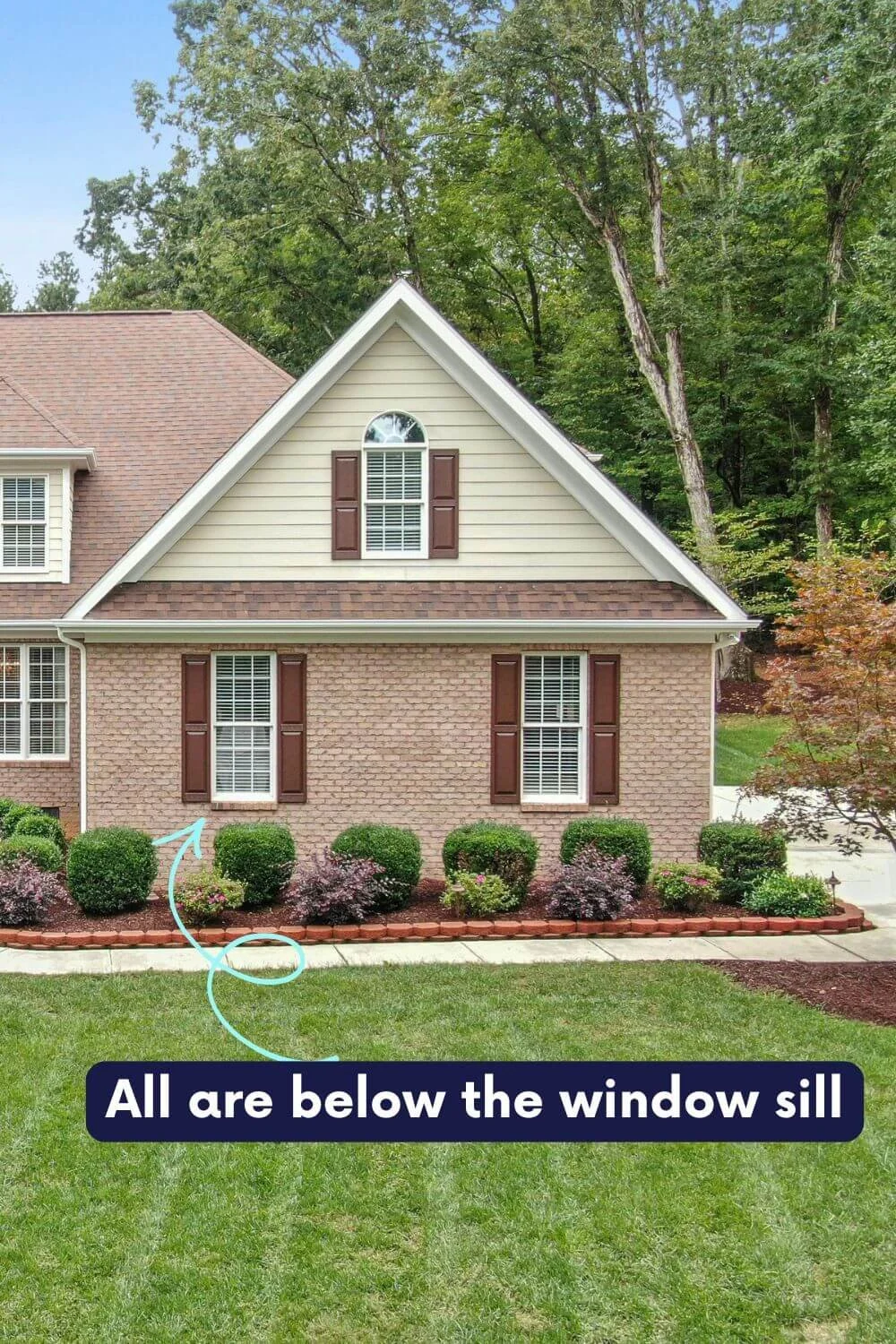
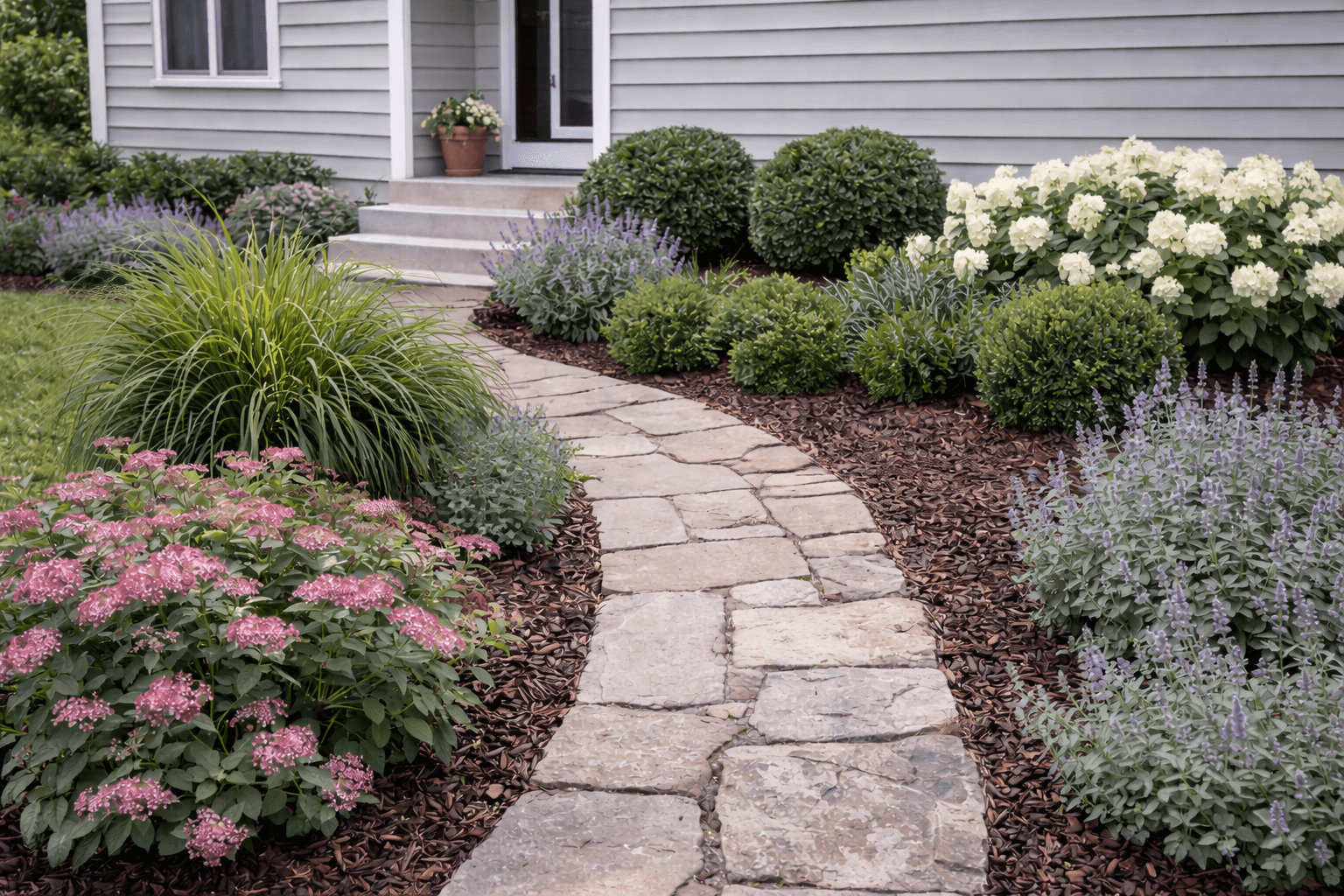
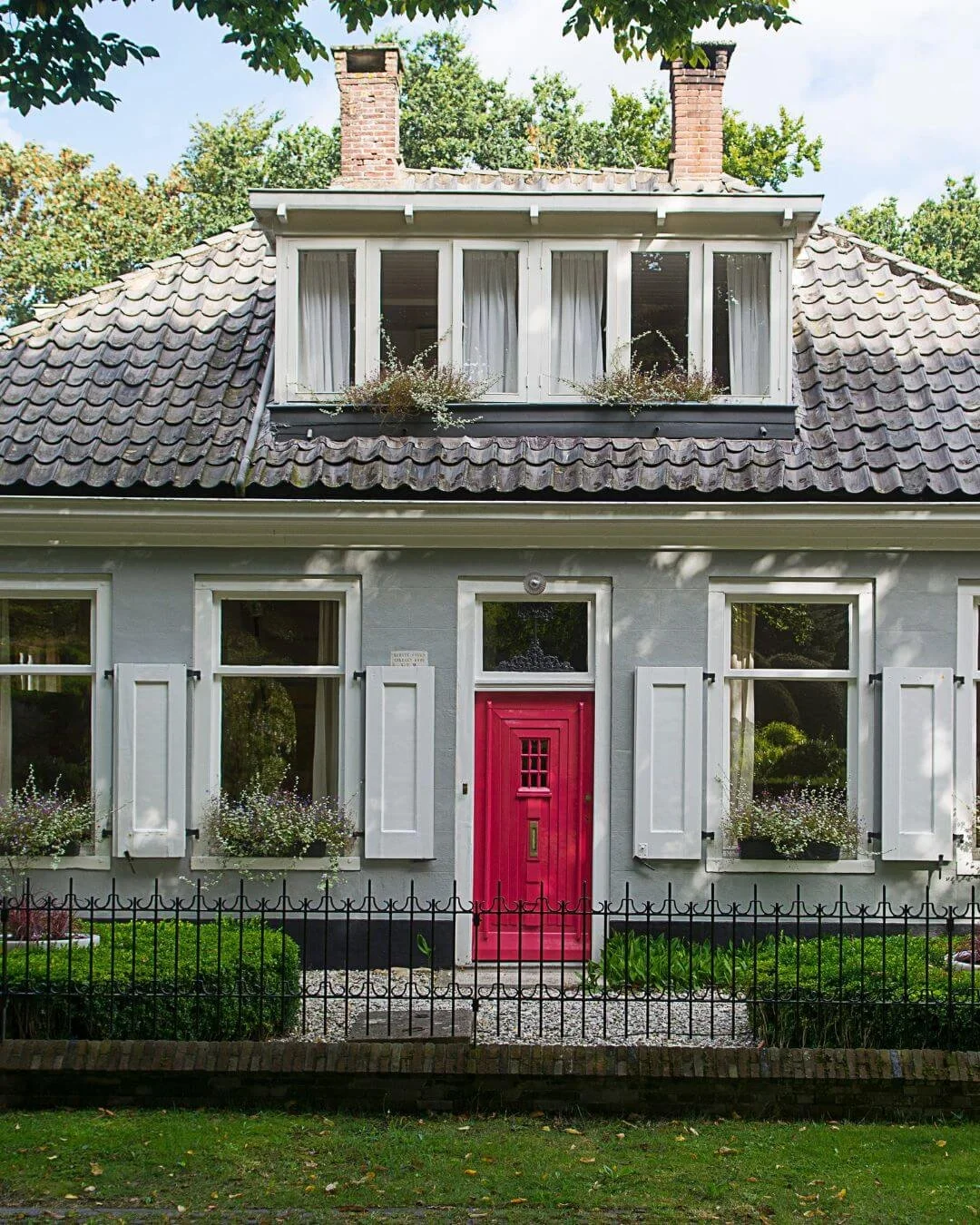
This planting is simple and layered and the correct height.
Quick Cheat Sheet: Match Your Windows to the Right Plant Heights
If you have low windows (basement windows or low sills)
Go low. Like… lower than you think.
Under-window plants here usually need to stay around 6–18 inches mature height. This is where groundcovers, small perennials, and truly dwarf shrubs shine.
If you have standard windows
This is the easiest situation. Most homes look great when the main under-window plants mature around 12–24 inches.
You can add taller flowers in front for seasonal color, but keep the “backbone” low.
If you have big picture windows
Treat the middle like a stage. Keep the center low so you don’t cut into light or the view. Build height at the sides/corners so it still looks landscaped.
The Fix in Real Life: 3 Window-Safe Foundation Layouts
This is where it gets fun, because you can make this look expensive and intentional without doing anything complicated. You’re basically choosing a pattern and repeating it.
Layout 1: Clean + Modern (Low, Repeated, Very “Put Together”)
This is my favorite for instant curb appeal.
Under the window: pick one low mounding plant and repeat it
Front edge: one low “ribbon” plant that runs along the whole bed
Corners: one taller anchor plant at each corner (not under the glass)
This works because repetition looks high-end. It’s the same reason hotel landscaping always looks polished: they don’t plant one of everything.
Layout 2: Soft + Cottage (Pretty and Lush Without Getting Messy)
If you want that fuller, layered look:
Under the window: 2–3 low shrubs in a loose drift (still below sill height)
In front: flowering perennials for color and movement
Front edge: one tidy border plant so it looks intentional, not wild
The trick here is that perennials can bloom taller without feeling like a wall. Shrubs are what create that bulky “blocked window” look.
Layout 3: Evergreen Backbone (So Winter Still Looks Good)
If you want it to look “finished” year-round:
Under the window: low evergreen mounds
Between windows or corners: slightly taller uprights (still mindful of sightlines)
Front edge: seasonal color (perennials or annuals)
This is the “I want curb appeal even in January” layout.
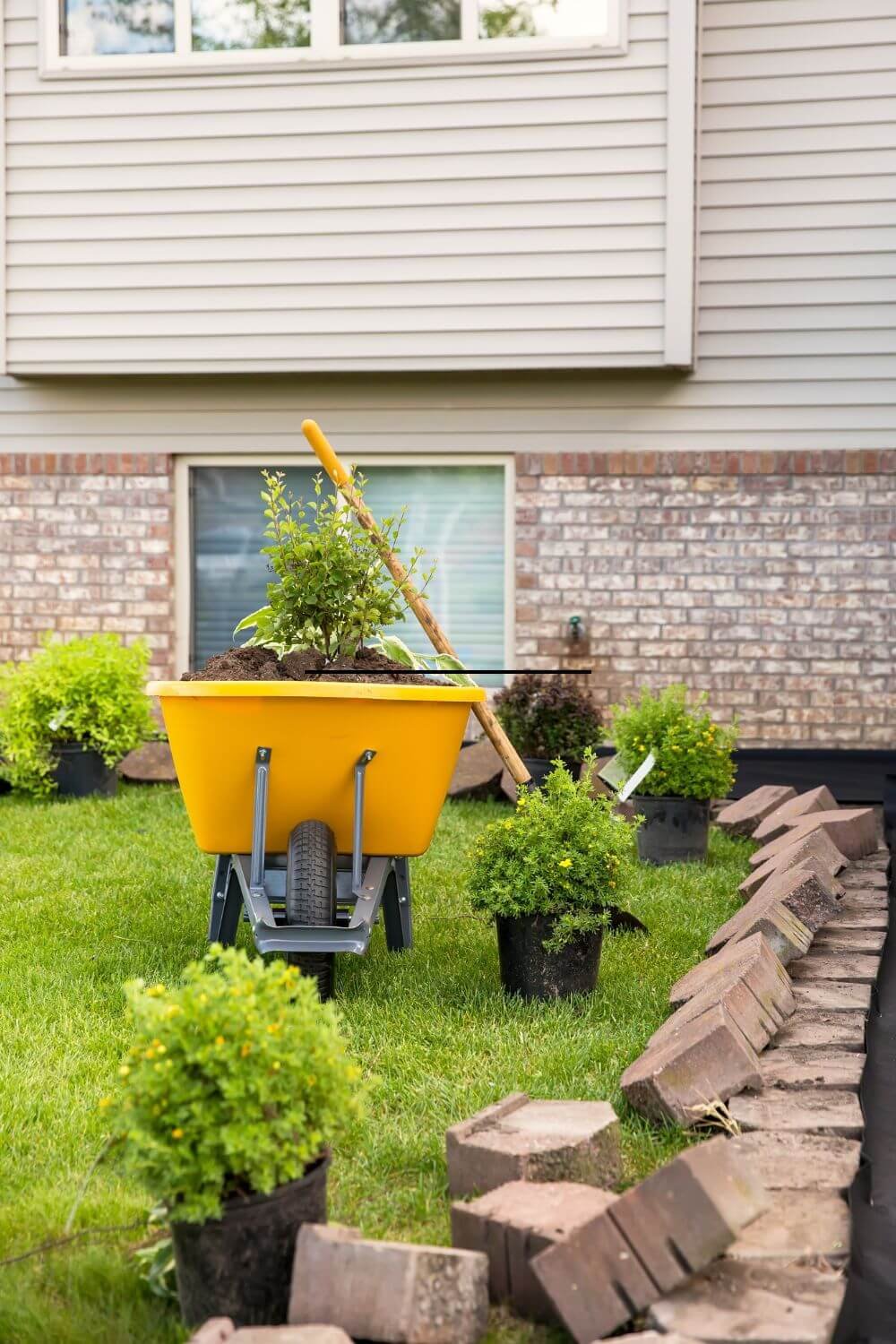
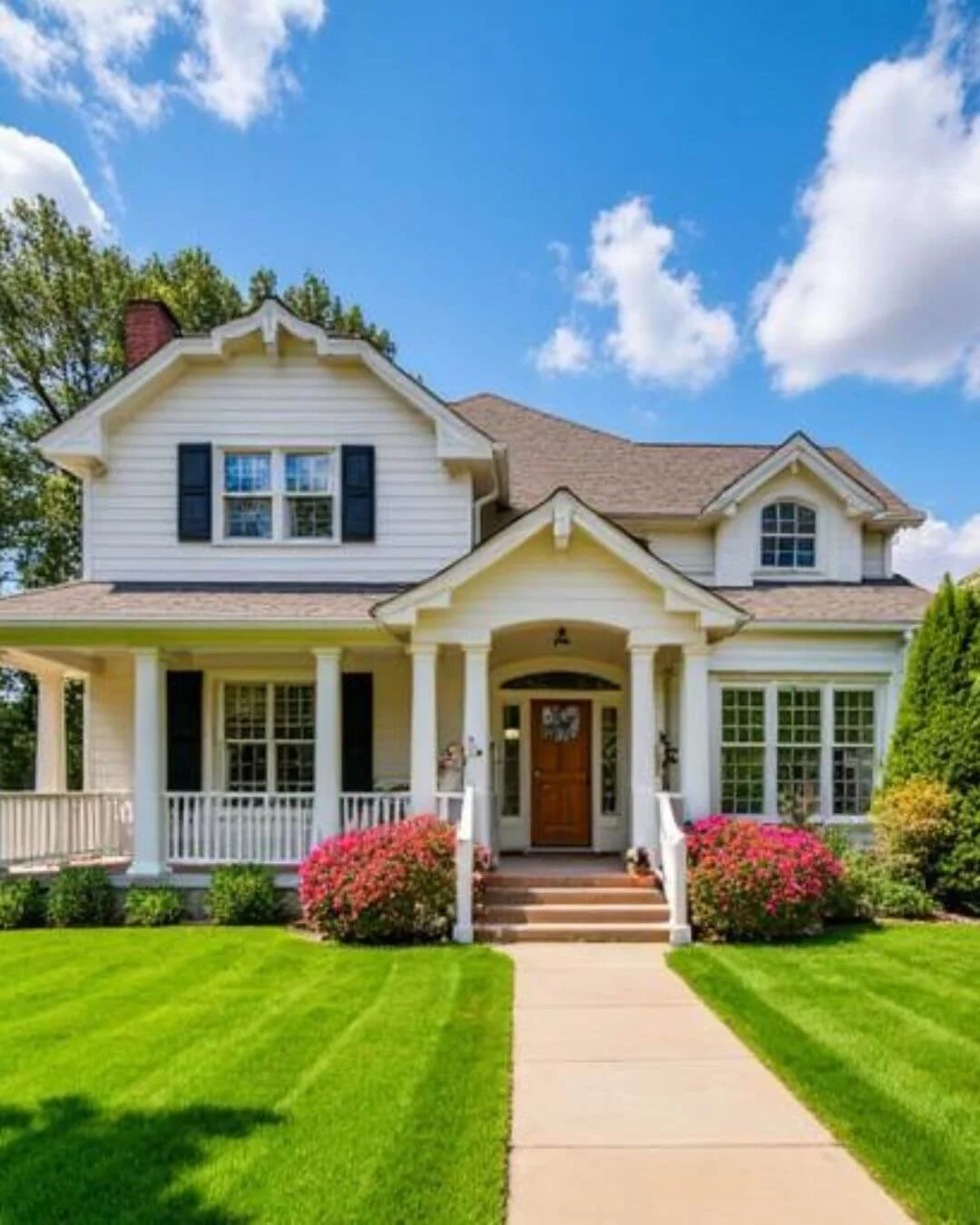
It is important to plan things out before planting to make sure spacing is adequate.
How Far From the House Should You Plant?
This is where so many foundation beds go wrong: plants get shoved right up against the house like they’re supposed to sit there.
They’re not.
You want airflow and space to maintain the bed. And you definitely don’t want shrubs constantly rubbing your siding or trapping moisture against the foundation.
A simple way to think about spacing is this:
If a plant matures 3 feet wide, it needs about 18 inches from the center to each side.
So if you plant it 6 inches from the foundation, that plant is going to live its whole life pressed against your house.
And that turns into:
mildew and moisture problems
pests hiding in a tight, damp spot
constant pruning just to access the bed
Leave yourself breathing room. Your future self will thank you.

Where Tall Plants Actually Belong
This is the part where I say: arborvitae aren’t the enemy. They’re just being asked to do the wrong job.
If you love the look of tall evergreens, put them where height makes sense:
along property lines
behind garden beds as a backdrop
as privacy screening away from windows
at the corners of the house only if they won’t swallow lights, numbers, or paths
Corners can handle height because they frame the house. Centering tall plants under windows is what creates that “green wall” effect.
Also—small but important—don’t block:
your porch light
your address numbers
your walkway/steps
When landscaping hides the functional parts of the front of your home, it stops being curb appeal and starts being annoying.
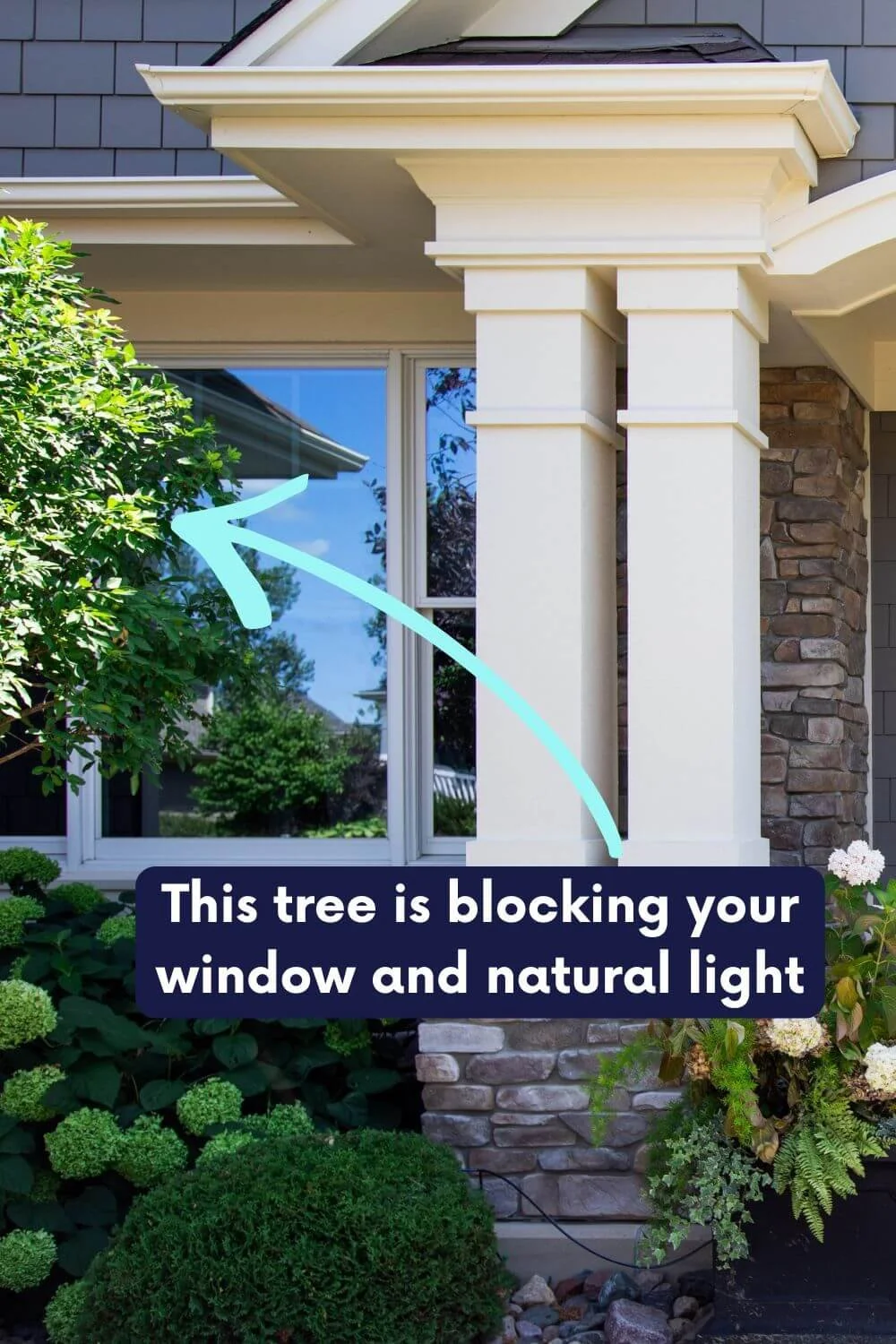
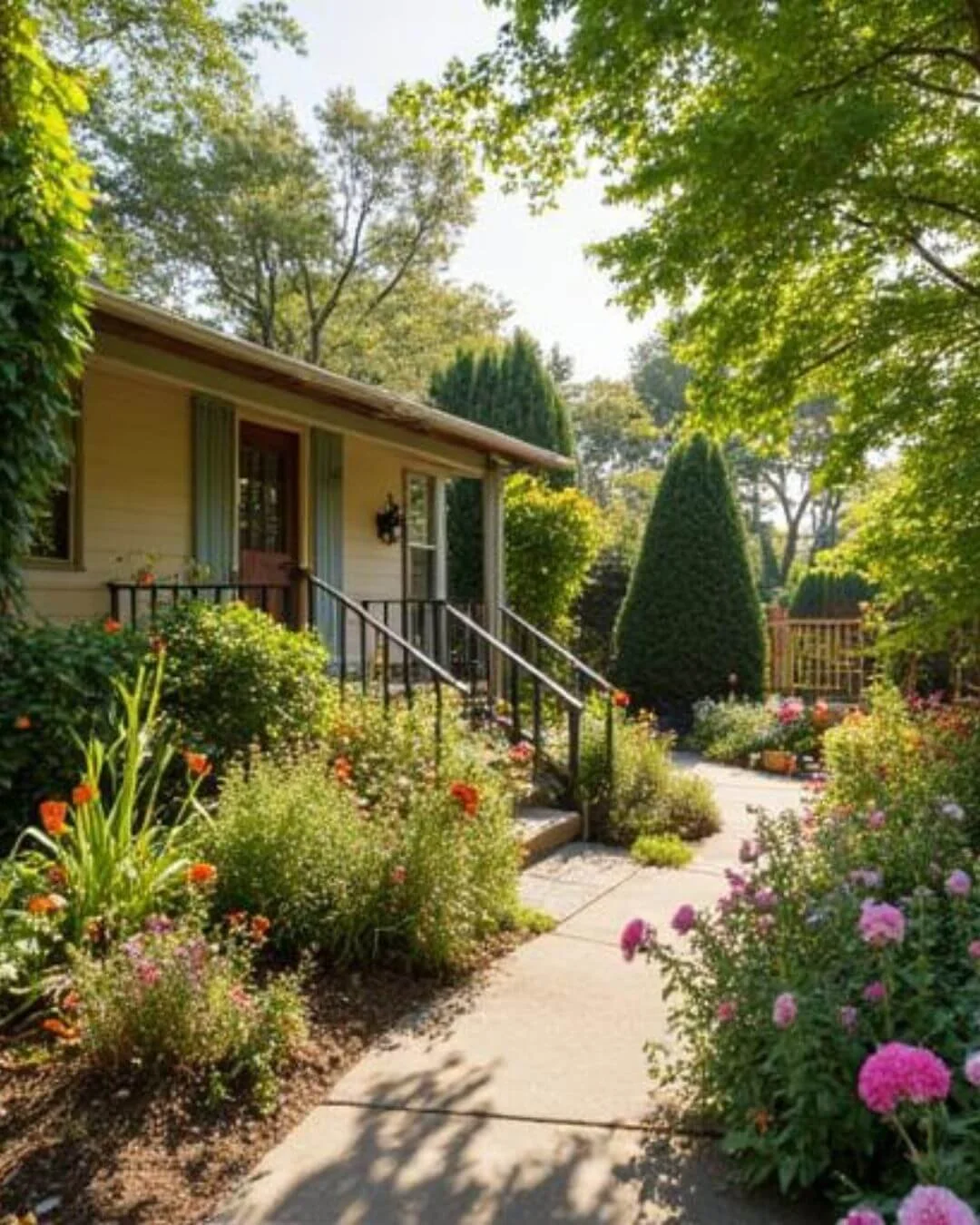
The tree should be place on an edge not blocking the window and natural light and it is too close to the house.
What If Your Windows Are Already Blocked?
If you’re reading this while staring at a row of shrubs that are basically living curtains, you have options.
Option 1: Prune and reshape (short-term)
This works if the plant can handle it and you’re pruning at the right time. Some shrubs bounce back beautifully. Some get stressed or look rough if you cut too hard.
Option 2: Replace (best long-term)
If a plant’s mature height is simply wrong for the spot, replacing it is usually less work than fighting it forever.
Sometimes the best “upgrade” is swapping one oversized shrub for two smaller, correctly sized plants. It often looks more designed and gives you better balance under the windows.
Option 3: Relocate (smart compromise)
If you like the plant, move it to a corner or another area where its size actually helps. A too-tall foundation shrub can be a perfect privacy plant somewhere else.
The Easiest Shopping Trick: Pick Plants by Height Buckets
If you want to avoid repeating this mistake, shop by mature height ranges instead of getting hypnotized by what looks good in the pot.
0–12 inches: edging + groundcovers
12–24 inches: the under-window “gold zone” for most homes
24–36 inches: between windows or farther out from the house
36+ inches: corners only (or away from windows)
If you stay in the right bucket under your windows, your foundation planting will almost always look good.
Keep It Window-Safe Long-Term (Without Turning It Into a Weekly Job)
Foundation planting shouldn’t feel like a haircut schedule.
A few low-effort habits keep things in check:
Do a quick sightline check twice a year (late spring and late summer)
Prune for shape, not constant size control
Thin when needed instead of shearing everything into tight balls
Don’t over-fertilize shrubs (extra growth = extra bulk = more blocking)
Bottom Line
The foundation planting mistake I see everywhere is using tall screening plants (like arborvitae) as under-window foundation shrubs.
The fix is simple:
Keep plants under windows below the sill (ideally 1/3–1/2 window height).
Save height for corners and between windows.
Plant for mature width so you’re not pruning forever.


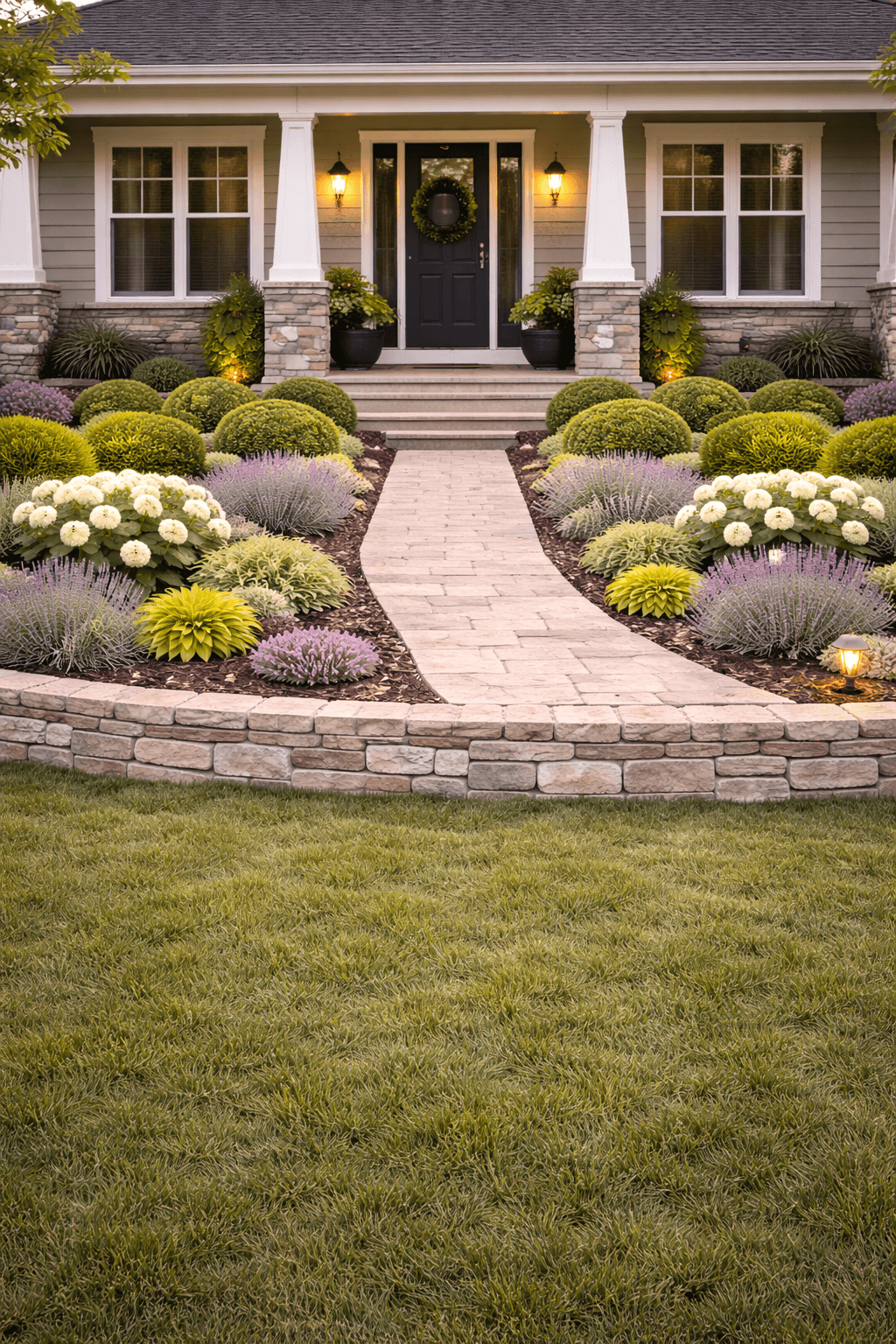

Spring porch planter recipes you can copy. Discover simple flower combinations for early and late spring that make your front porch feel intentional and elevated.