

Early Spring Front Porch Ideas That Survive Frost
There’s something about that first sunny 50-degree day that makes you want to decorate everything.
You open the front door, feel the fresh air, and suddenly your porch feels… tired. Winter left its mark. The pots are empty. The greenery looks dull. You’re ready for color.
And then you check the forecast.
28° tonight.
Early spring decorating is a different game — especially if you live in a colder climate like I do. You can absolutely make your porch look fresh right now. You just have to work with the season you’re actually in.
Let me show you what that looks like.
This post is part of my complete Spring Front Porch Ideas guide, where I break down layouts, planter recipes, and decorating strategies for every size porch.
The items listed are accompanied by affiliate links, meaning I earn a small commission if a purchase is made through my links. This has no impact on the cost to the consumer. I link to products this way whenever possible, and it has no bearing on the products I choose to review or recommend.
1.The Classic Early Spring Symmetry Porch
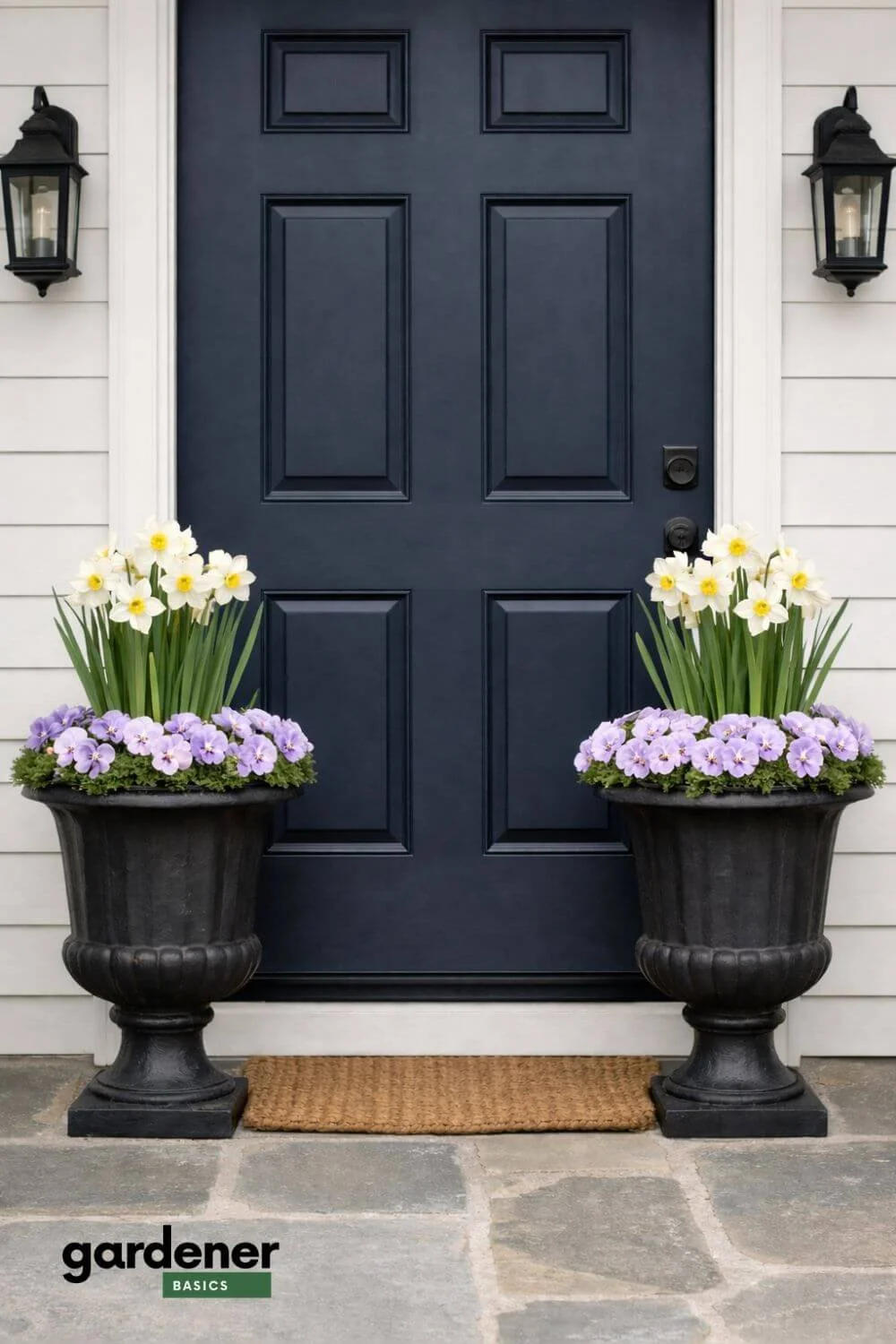
If your front door is centered, this is the easiest layout to copy.
Two tall urns. One on each side. Nothing fancy.
In the center of each planter, white daffodils for height. Around the base, pansies in soft purple or pale yellow. Then tuck moss around the soil so it doesn’t look sparse.
That’s it.
It feels structured. Balanced. Clean.
And here’s the important part — pansies and daffodils don’t panic when temperatures dip. They’re built for this weird in-between season.
This look works because it respects early spring. It’s fresh, but not forcing summer.
2. The “Small Porch, Big Planter” Look
If your porch is narrow or shallow, I want you to ignore the instinct to add more.
Small porches don’t need more stuff. They need better scale.
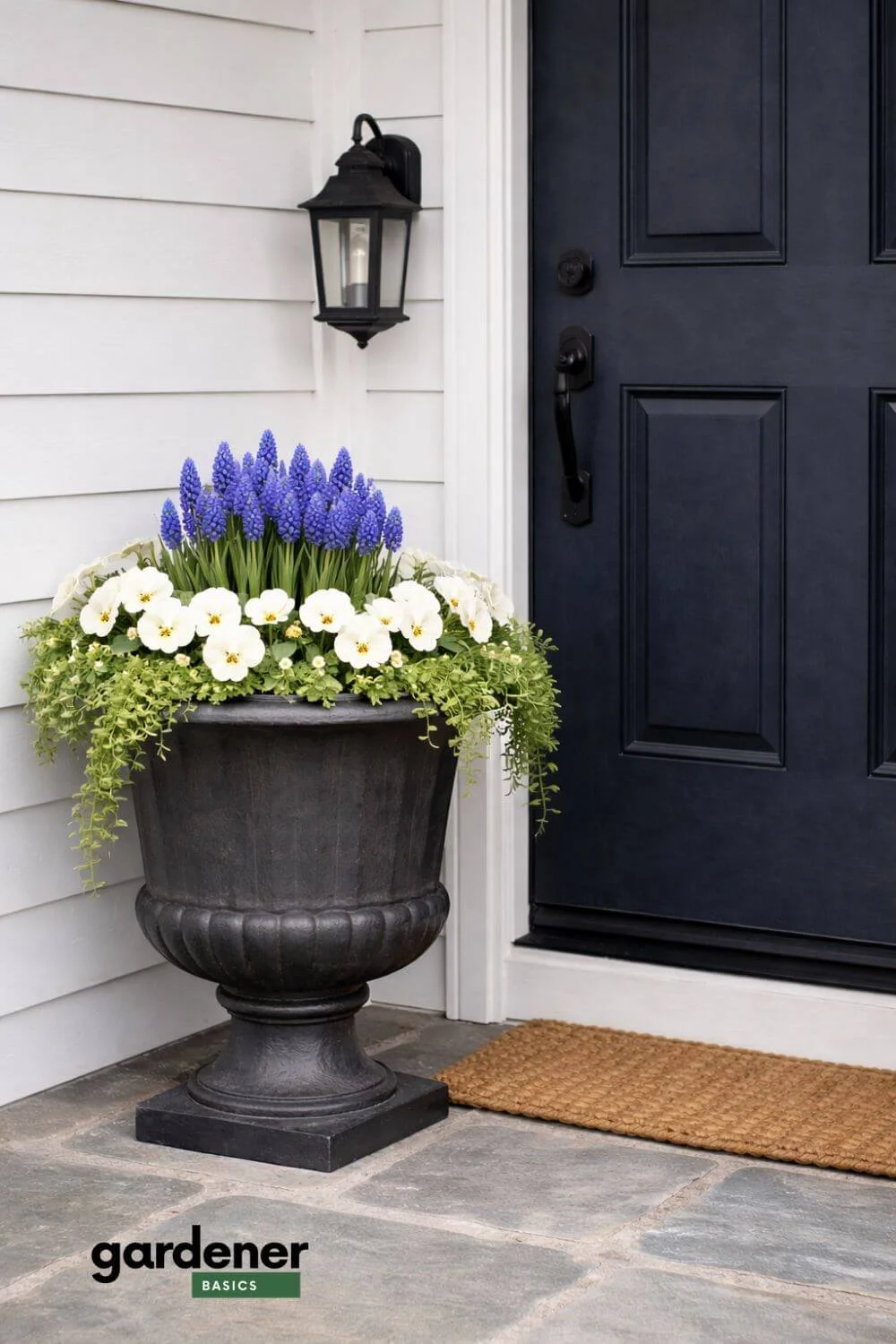
Instead of two tiny pots squeezed beside the door, use one substantial planter. Something with presence.
Fill it with grape hyacinths clustered in the center. Surround them with white pansies. Add creeping Jenny or alyssum to soften the edge.
Suddenly it looks intentional.
One strong container will always look more designer than three small ones scattered around.
RELATED: 15 Small Spring Front Porch Ideas That Still Feel Grand
3. The Evergreen Anchor Trick
This is one of my favorite strategies because it makes the whole year easier.
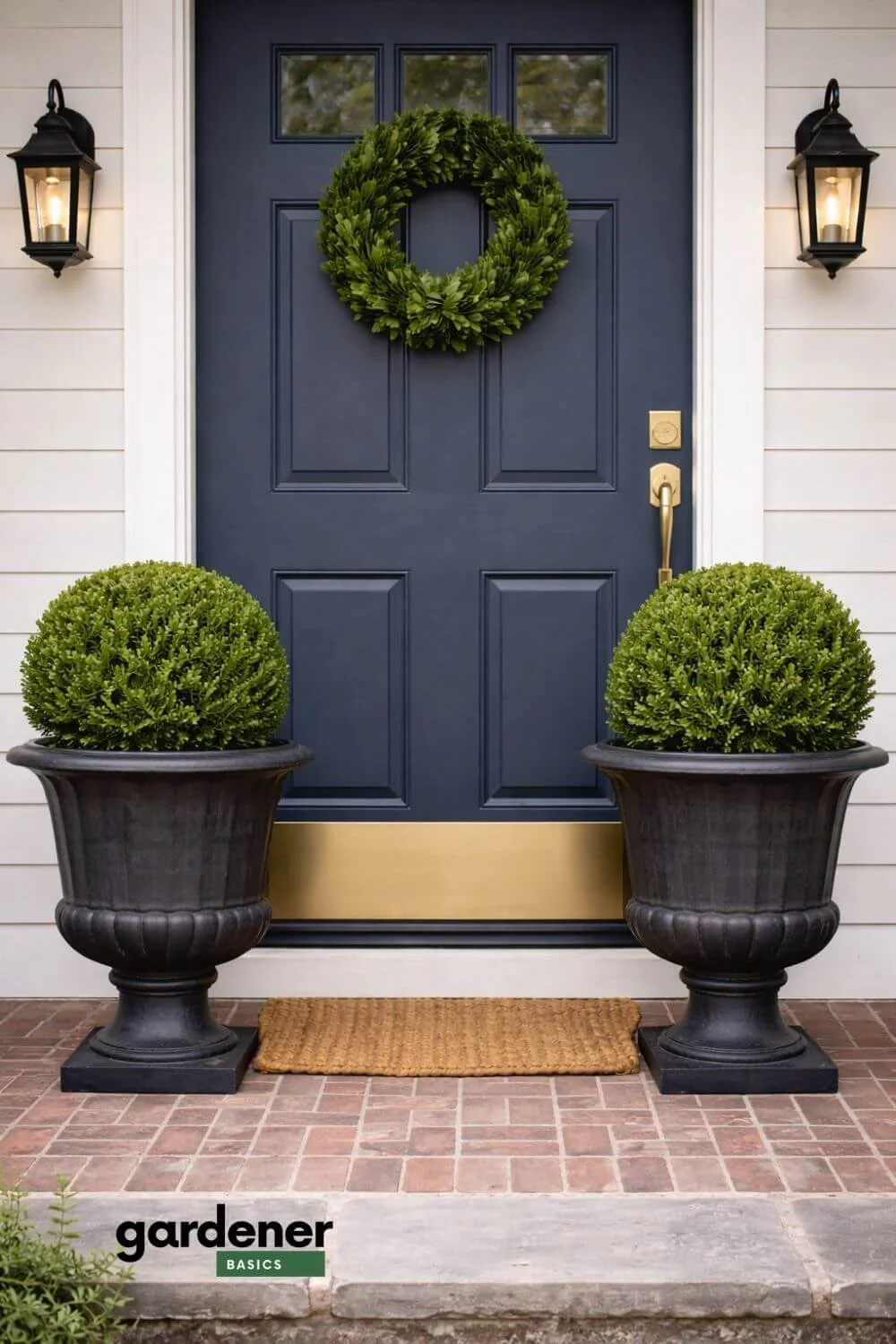
Use small evergreen shrubs in your porch containers — boxwoods are perfect for this. They act as a permanent structure. They don’t care about frost. They don’t look sad in March.
Then, in early spring, tuck pansies and a few daffodils around the base.
You get greenery, structure, and color — without having to completely redo everything in six weeks.
When late spring arrives, you simply swap the flowers and keep the anchor.
It’s such a simple shift, but it makes your porch feel layered instead of temporary.

4. The Calm Green & White Porch
Early spring doesn’t have to mean bright color.
Sometimes the most beautiful porches in March are green and white.
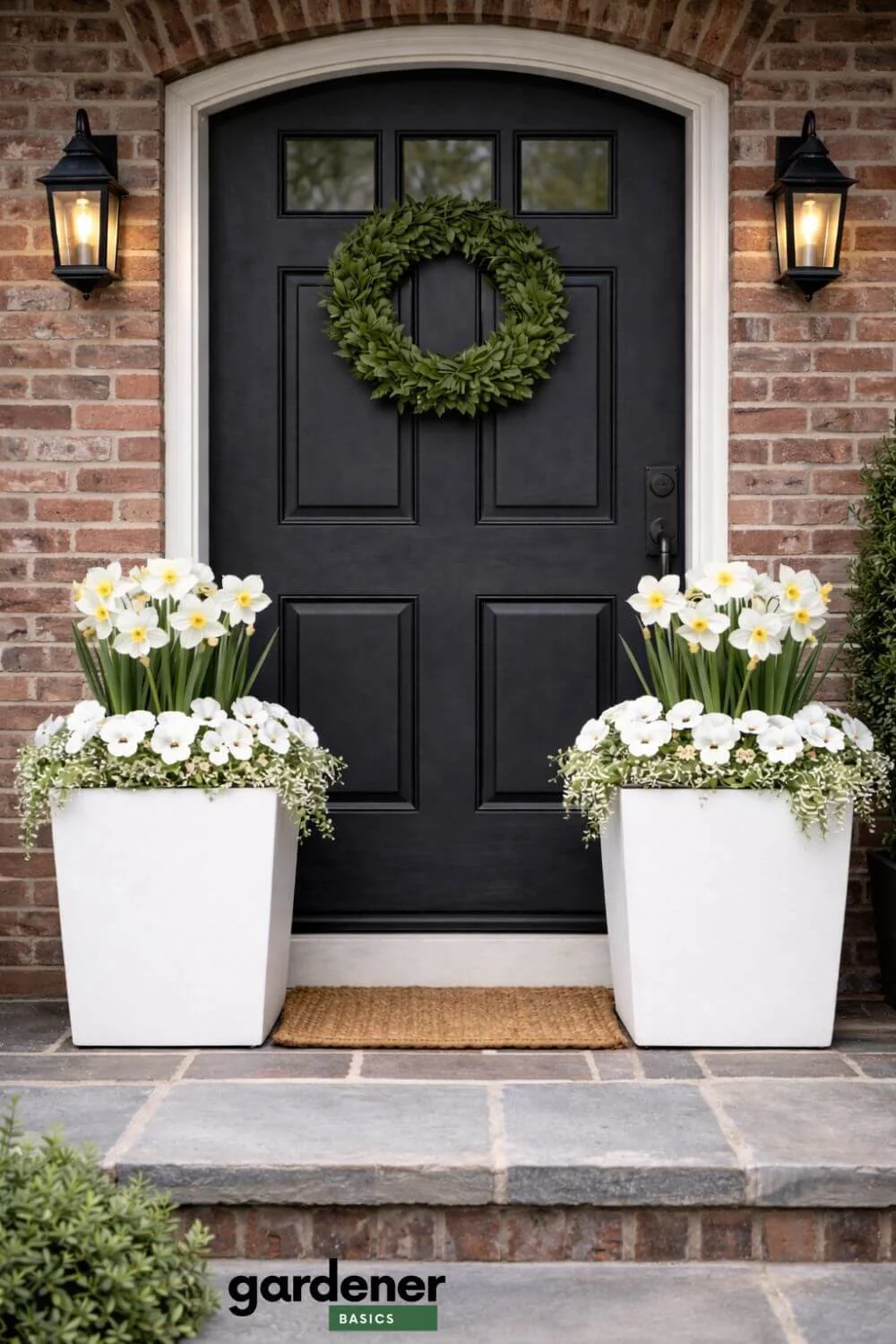
White daffodils. White pansies. Alyssum spilling over the edges. A simple greenery wreath on the door.
It feels clean. Crisp. Calm.
And honestly? That restraint is what makes it feel elevated.
Early spring is subtle. When you lean into that instead of fighting it, the whole porch feels more cohesive.
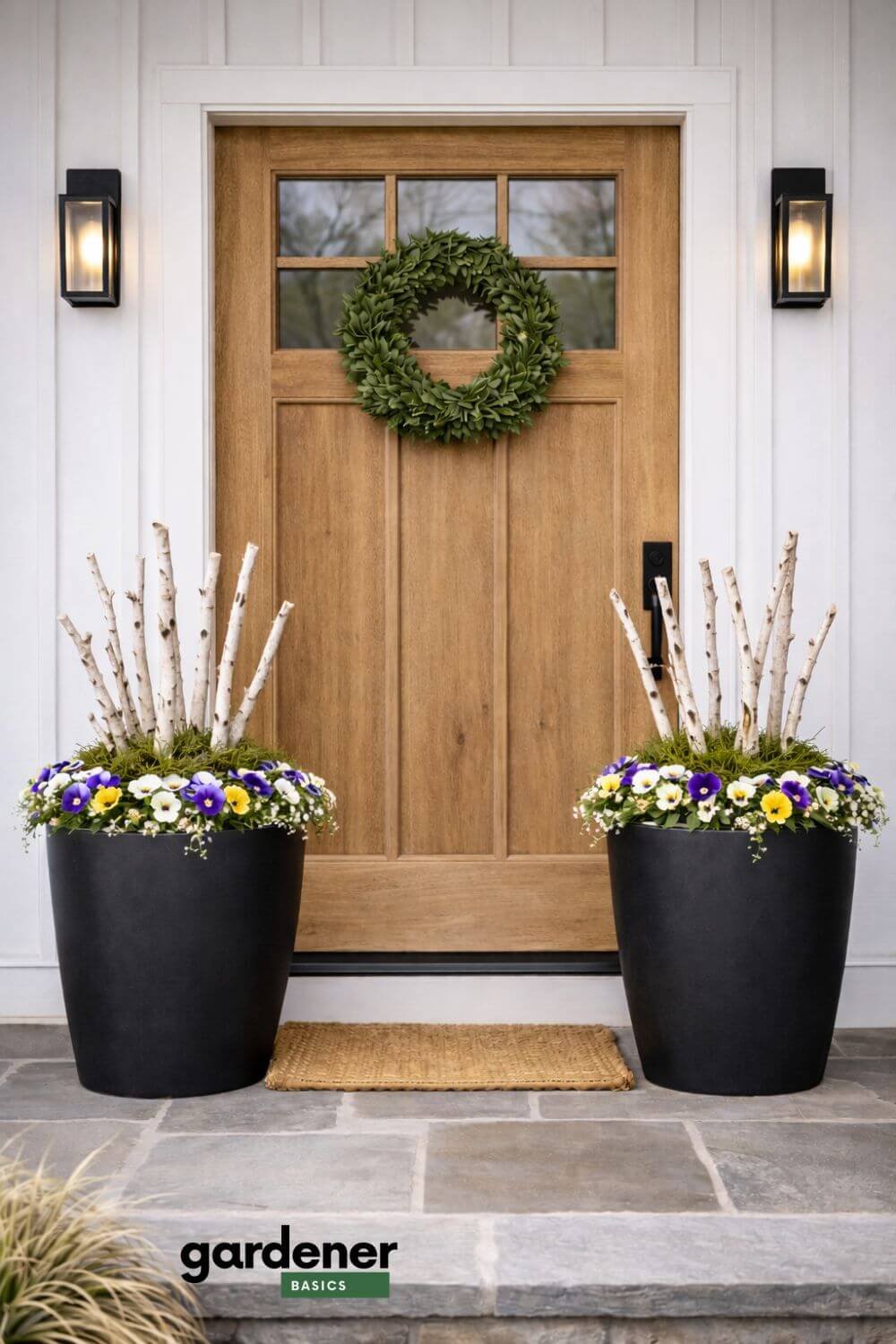
5. Using Branches Before Flowers Take Off
There’s a window in early spring when flowers aren’t fully blooming yet. That’s when texture does the heavy lifting.
Tall branches clipped from your yard instantly give containers height. Birch branches look especially beautiful in darker urns.
Around the base, add moss and a ring of pansies or violas.
The branches handle cold effortlessly. The flowers fill in softly below.
It feels organic and seasonal — not forced.
6. A Layered Porch With Seating
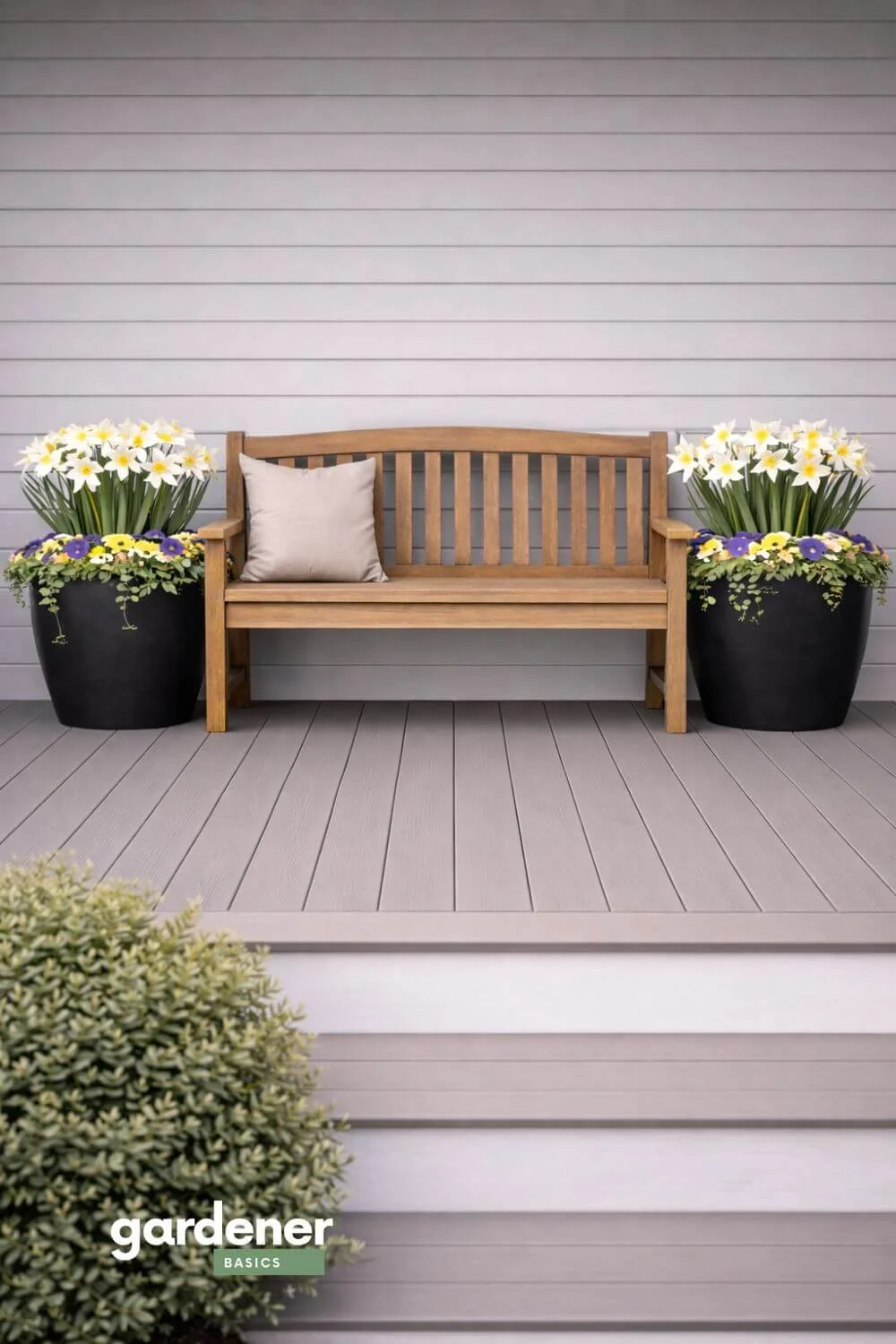
If you have a bench or rockers, early spring is about subtle layering.
Matching planters on either side. Daffodils for height. Pansies for color. Maybe ivy for a soft edge.
Layer a simple doormat. Add one neutral pillow.
The repetition keeps it structured. The limited palette keeps it calm.
It feels lived in, but not cluttered.
Why These Porches Actually Survive Frost
None of these examples rely on fragile, heat-loving annuals.
They use:
Pansies
Violas
Daffodils
Grape hyacinths
Alyssum
Evergreen anchors
All of which tolerate chilly nights far better than summer flowers.
If a frost warning pops up, you can pull smaller pots closer to the house or cover larger containers with frost cloth. But most of the time, these plants bounce right back.
That’s the key — choosing plants meant for the moment.
Early spring decorating isn’t about pretending it’s warm.
It’s about signaling that winter is ending — gently.
Focus on structure. Use frost-tolerant flowers. Keep your color palette calm. Repeat your plant combinations so it feels intentional.
And when that random 28-degree night shows up?
Your porch will still look beautiful in the morning.

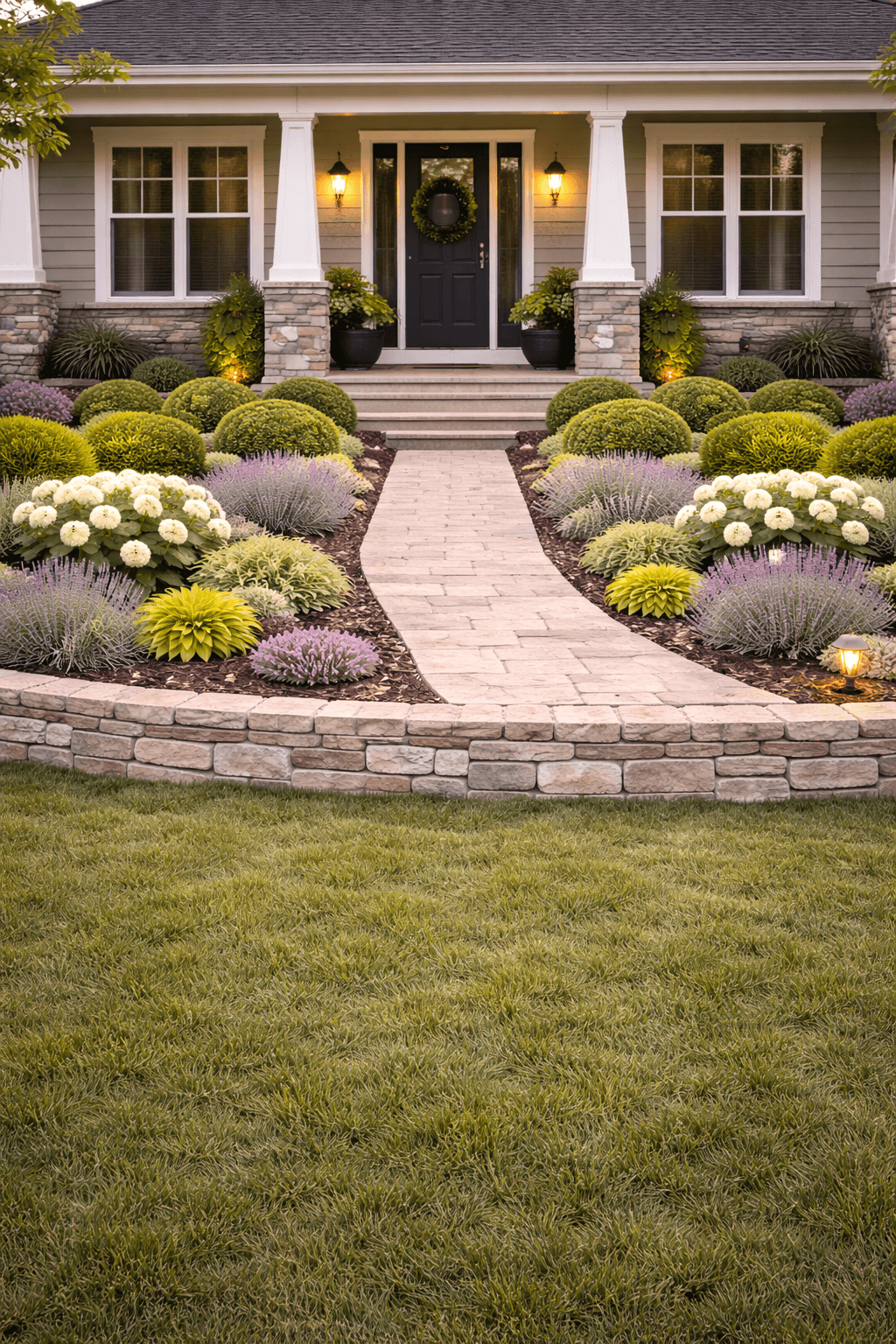
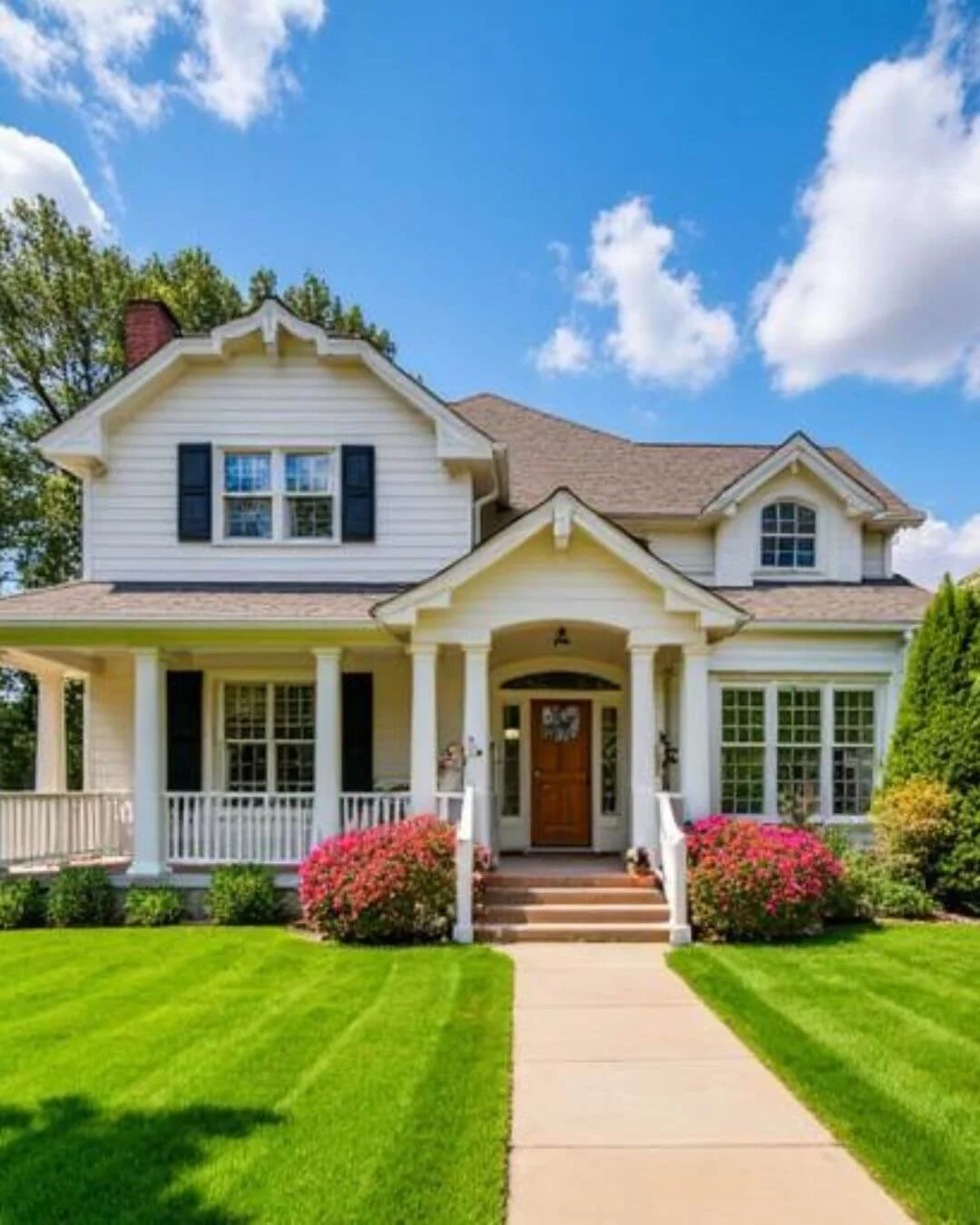
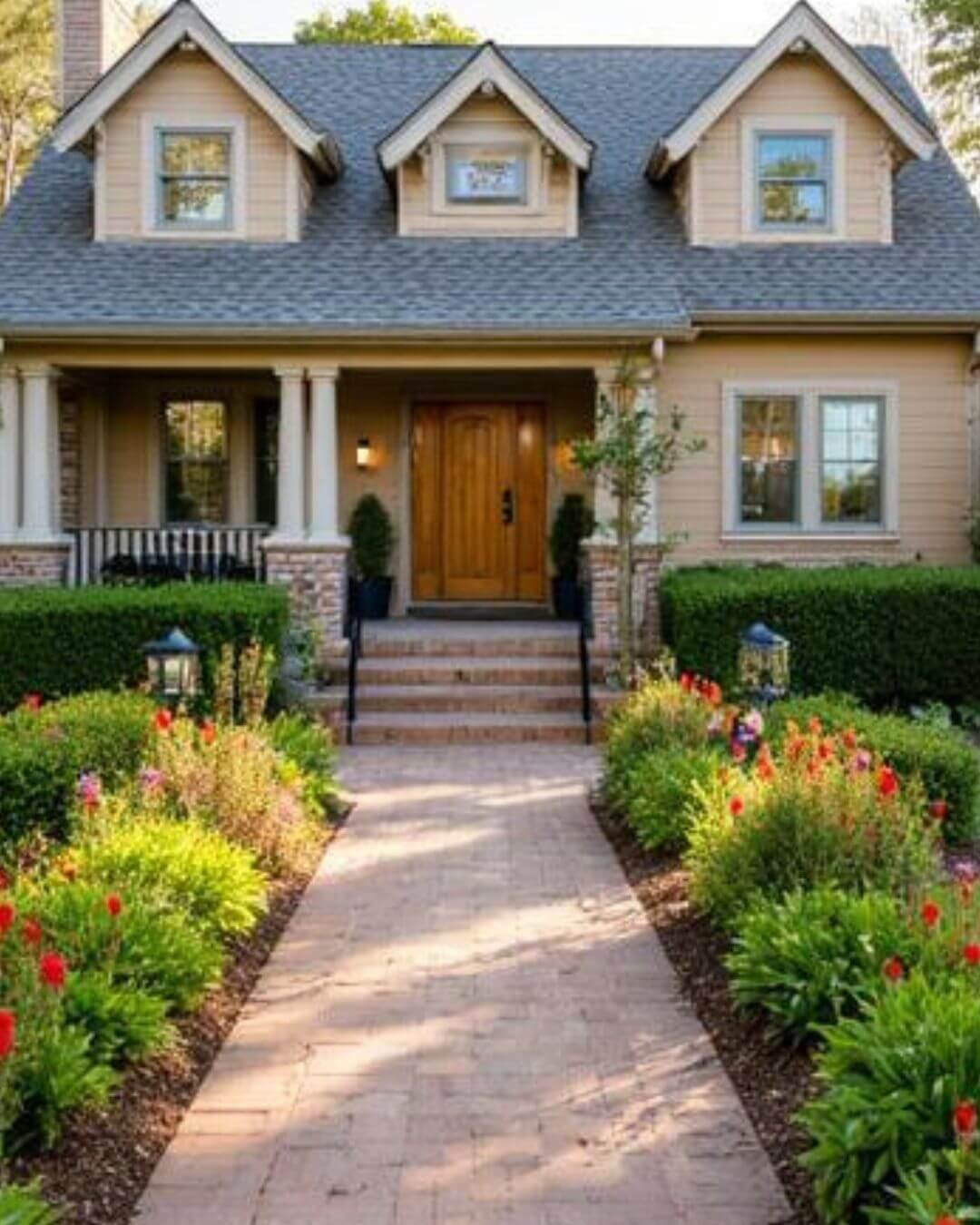
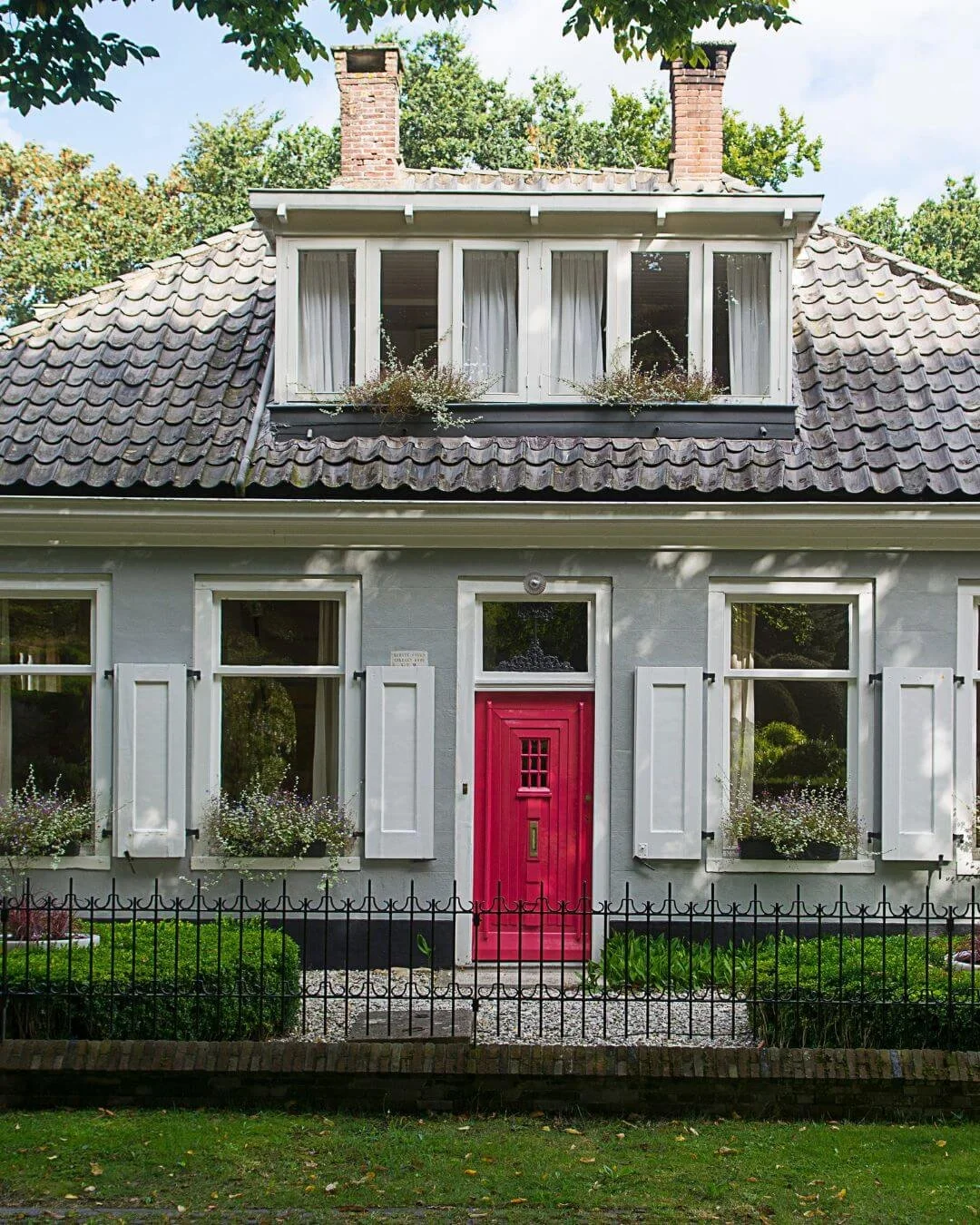

Spring porch planter recipes you can copy. Discover simple flower combinations for early and late spring that make your front porch feel intentional and elevated.