

No-Grass Small Front Yard Ideas (What to Do Instead of Lawn)
I’m going to say something that might sound slightly bold.
In a small front yard, grass is often wasting space.
In bigger yards, lawn gives you breathing room. In small ones? It usually turns into a little green rectangle that needs mowing, edging, watering… and doesn’t actually add much visual impact.
I’ve walked past plenty of houses where 80% of the front yard is lawn and 20% is planting. Technically neat. Technically maintained. But it doesn’t feel intentional.
If you’re thinking about removing or reducing grass in a small front yard, I actually think you’re on the right track.
But — and this is important — ripping out lawn doesn’t automatically make things look better.
I’ve also seen small yards where the grass came out and chaos moved in.
The key isn’t “no grass.”
The key is structure.
If you haven’t read the core layout system yet, start with Small Front Yard Landscaping Layout (A Simple Formula That Works). Everything below builds on that same structure — just without turf.
The items listed are accompanied by affiliate links, meaning I earn a small commission if a purchase is made through my links. This has no impact on the cost to the consumer. I link to products this way whenever possible, and it has no bearing on the products I choose to review or recommend.
Why Small Front Lawns Often Feel Awkward
When a yard is small, mowing becomes fussy. You’re cutting around mailbox posts, walkway curves, tiny bed lines. It’s more trimming than mowing.
And visually, small lawns tend to:
Break up the space in an odd way
Shrink the planting beds
Create narrow strips that never look truly lush
In Zone 6 especially, winter doesn’t do small lawns any favors. By March they look tired. By April they look confused.
That’s why expanding planting beds or replacing lawn entirely can make a house look more finished — not less.
Option 1: Expand the Beds (The Cleanest Look)
This is my favorite solution for small front yards.
Instead of a tiny lawn island in the middle, you extend your planting beds outward and design the entire space as one cohesive layout.
But here’s where people go wrong: they remove grass and then add even more plant varieties.
When you increase planting space, restraint matters even more.
The best no-grass front yards I see have:
Strong evergreen anchors
Repeating shrubs
Clear spacing
A defined edge
Not twelve different plants competing for attention.
If your yard tends to feel crowded instead of cohesive, you’ll want to read 5 Small Front Yard Landscaping Mistakes That Make Your House Look Smaller — because most no-grass issues are really scale issues.
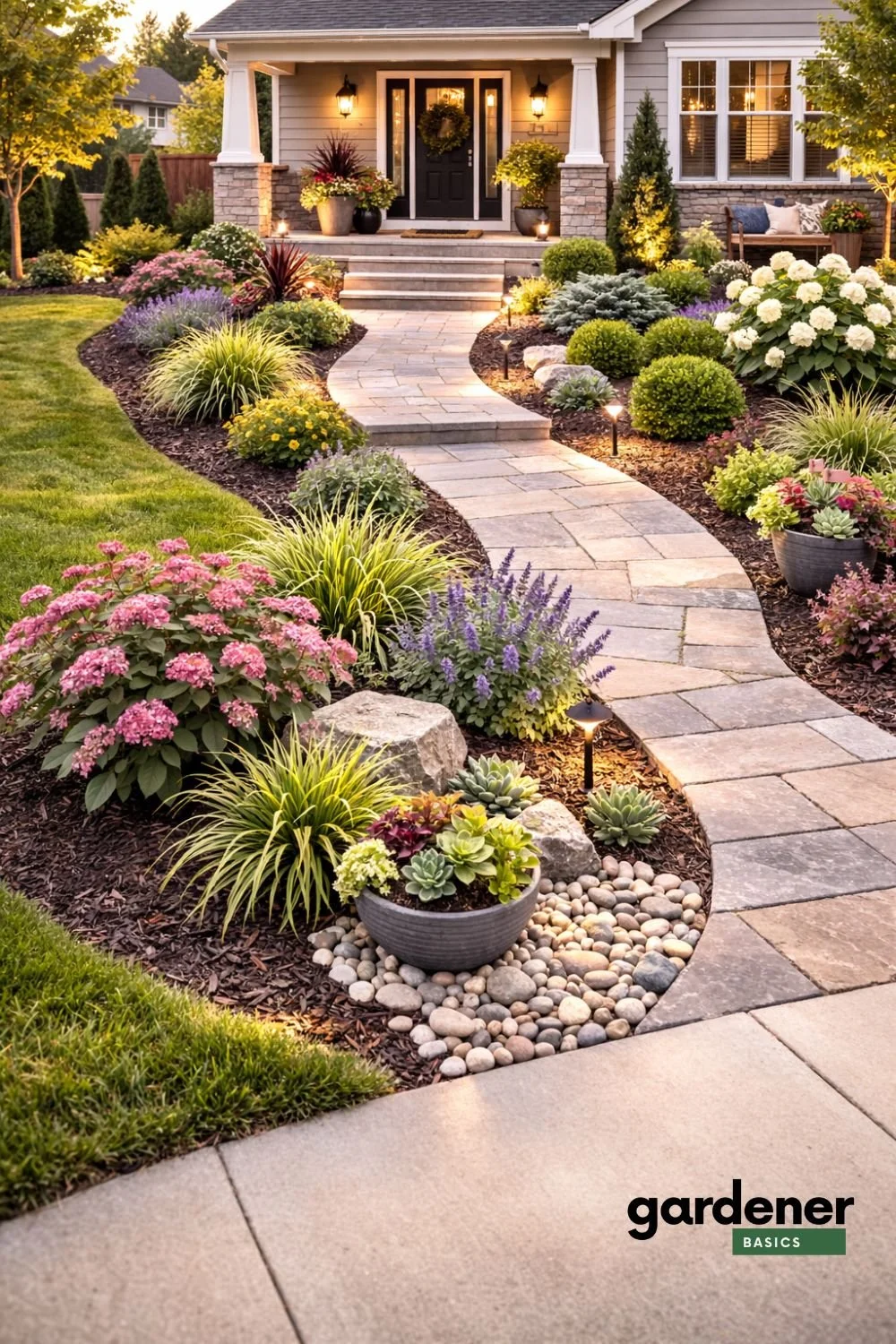
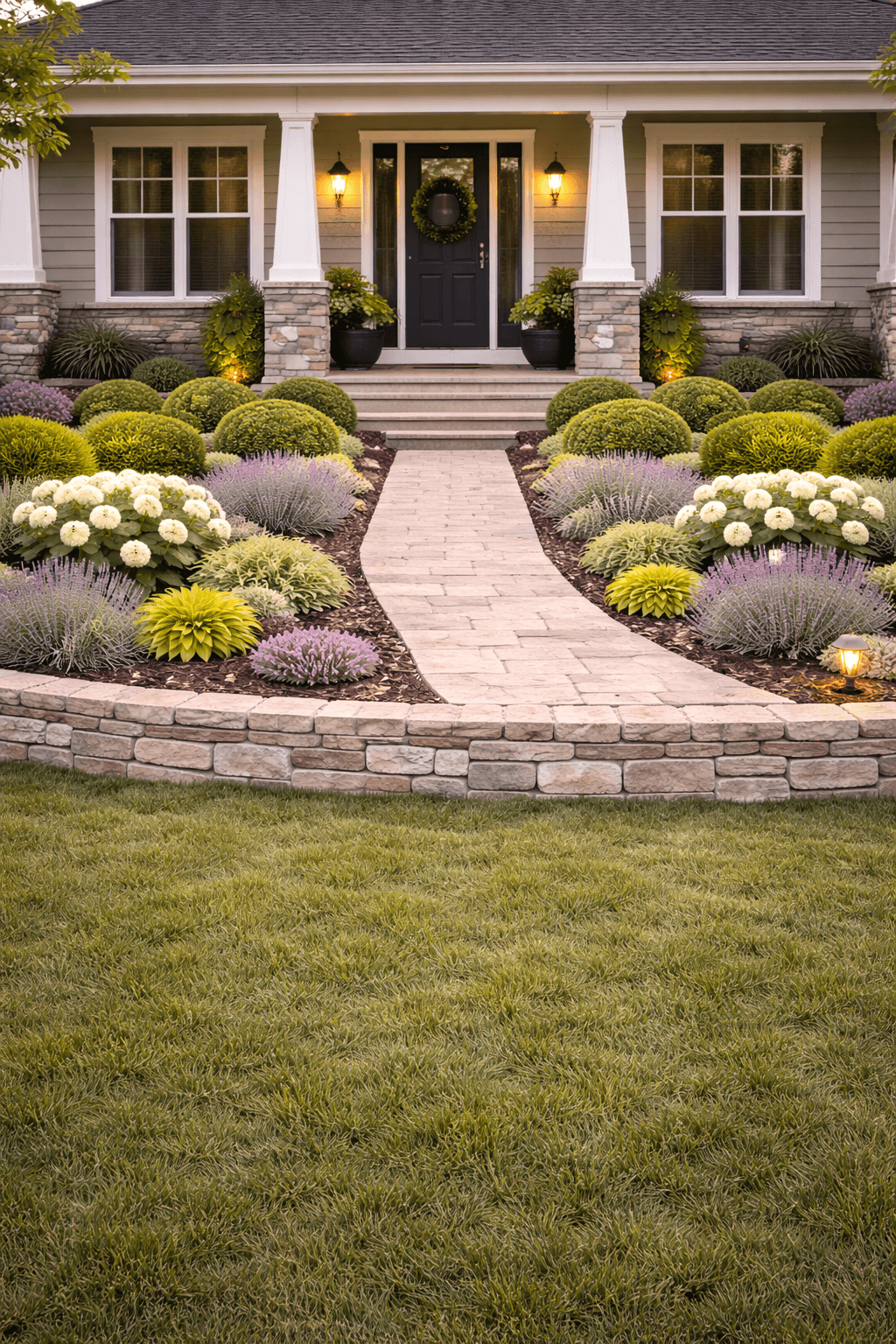
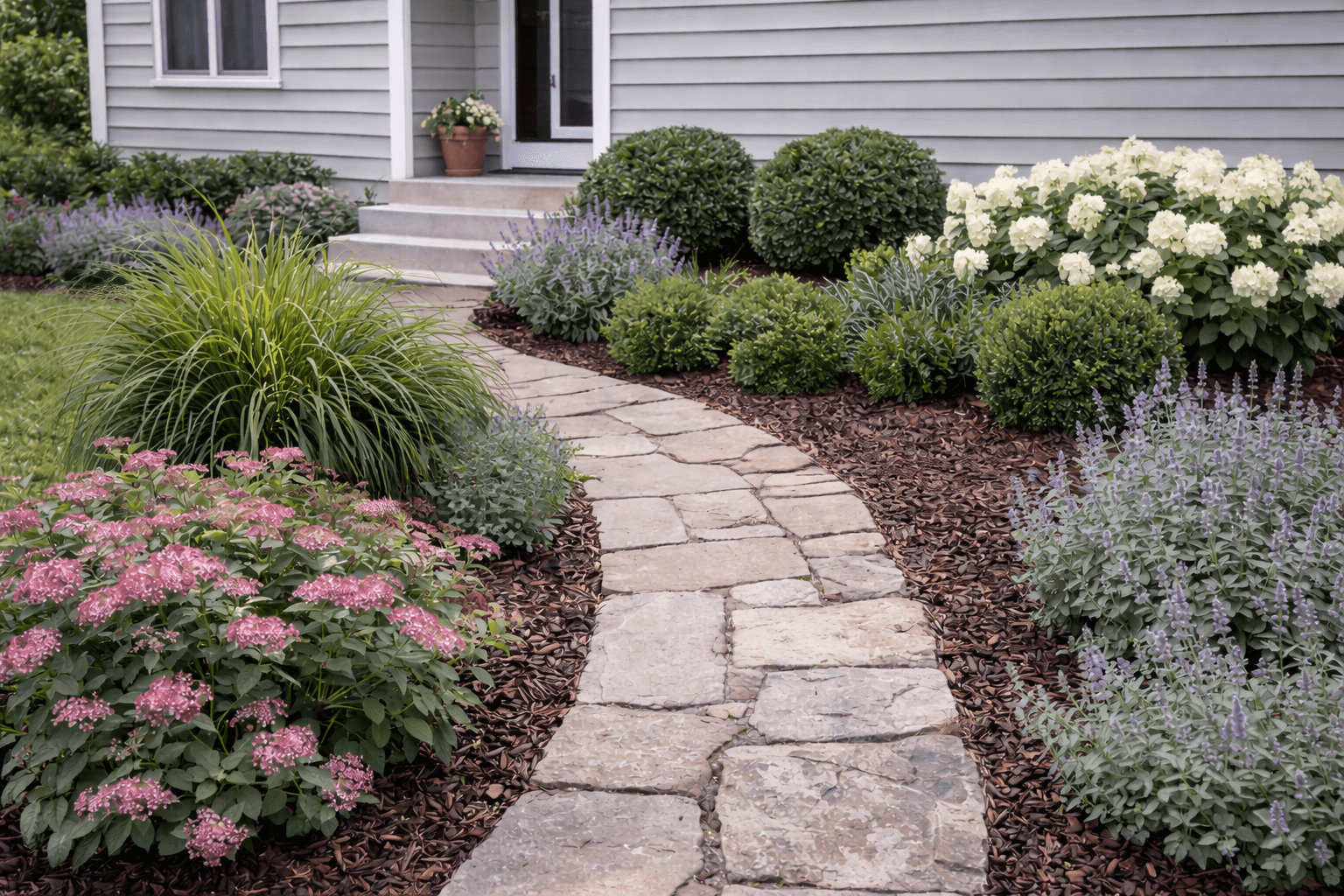
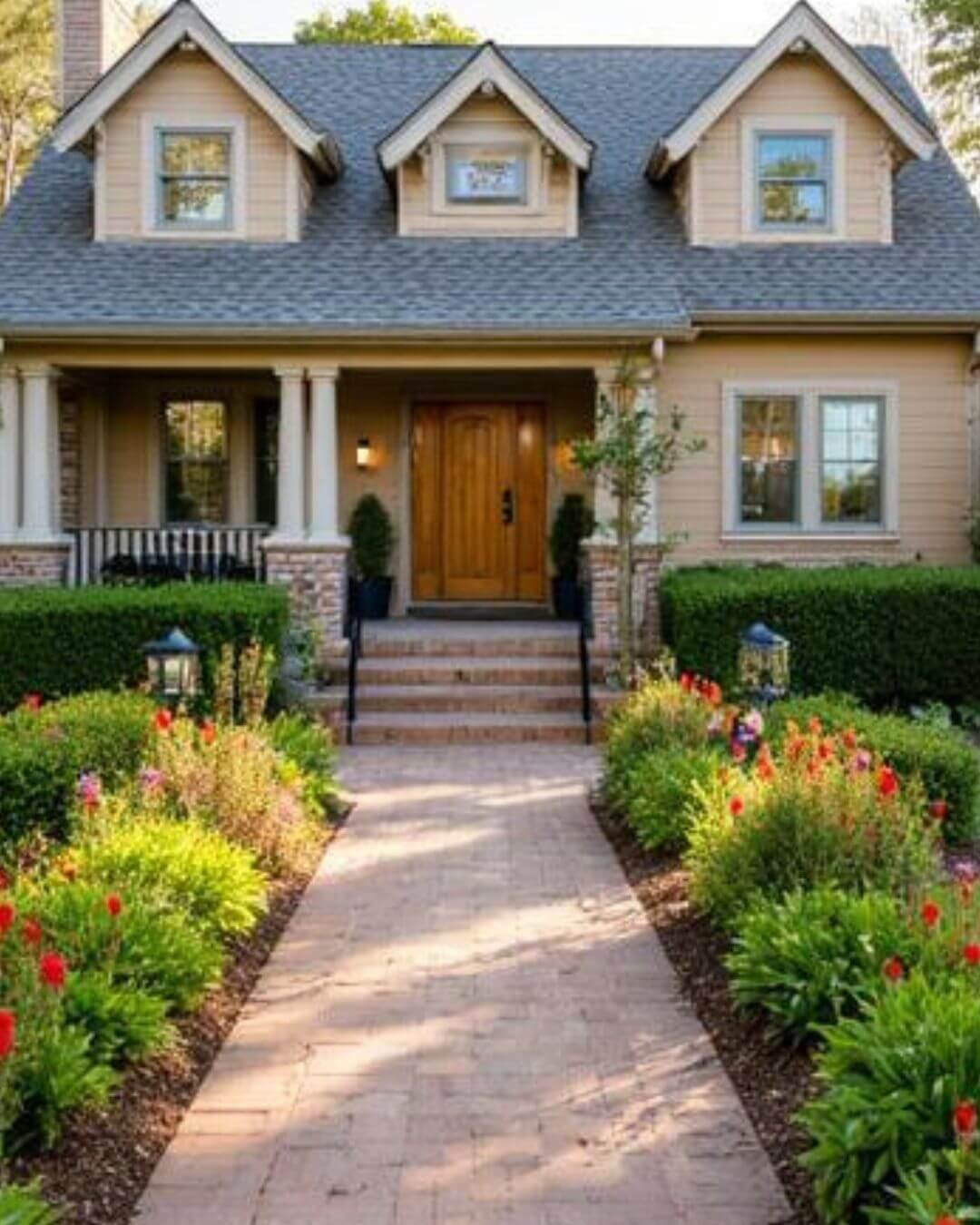
I mocked up an image to give you an idea of what an expanded bed could look like.
Option 2: Gravel as Negative Space
Gravel can work beautifully in small front yards — especially with simpler home styles.
Think of it as replacing lawn with calm.
But I’ll be honest: gravel without structure looks like a parking lot.
If you go this route, you still need:
Evergreen anchors
Repeating shrubs
Defined edging
Clear proportions
Otherwise, it feels unfinished.
And edging matters here more than ever. If you need realistic edge ideas that don’t look fussy, I share practical examples in Landscape Border Ideas That Beginners Will Love.
Gravel works best when it’s contained.
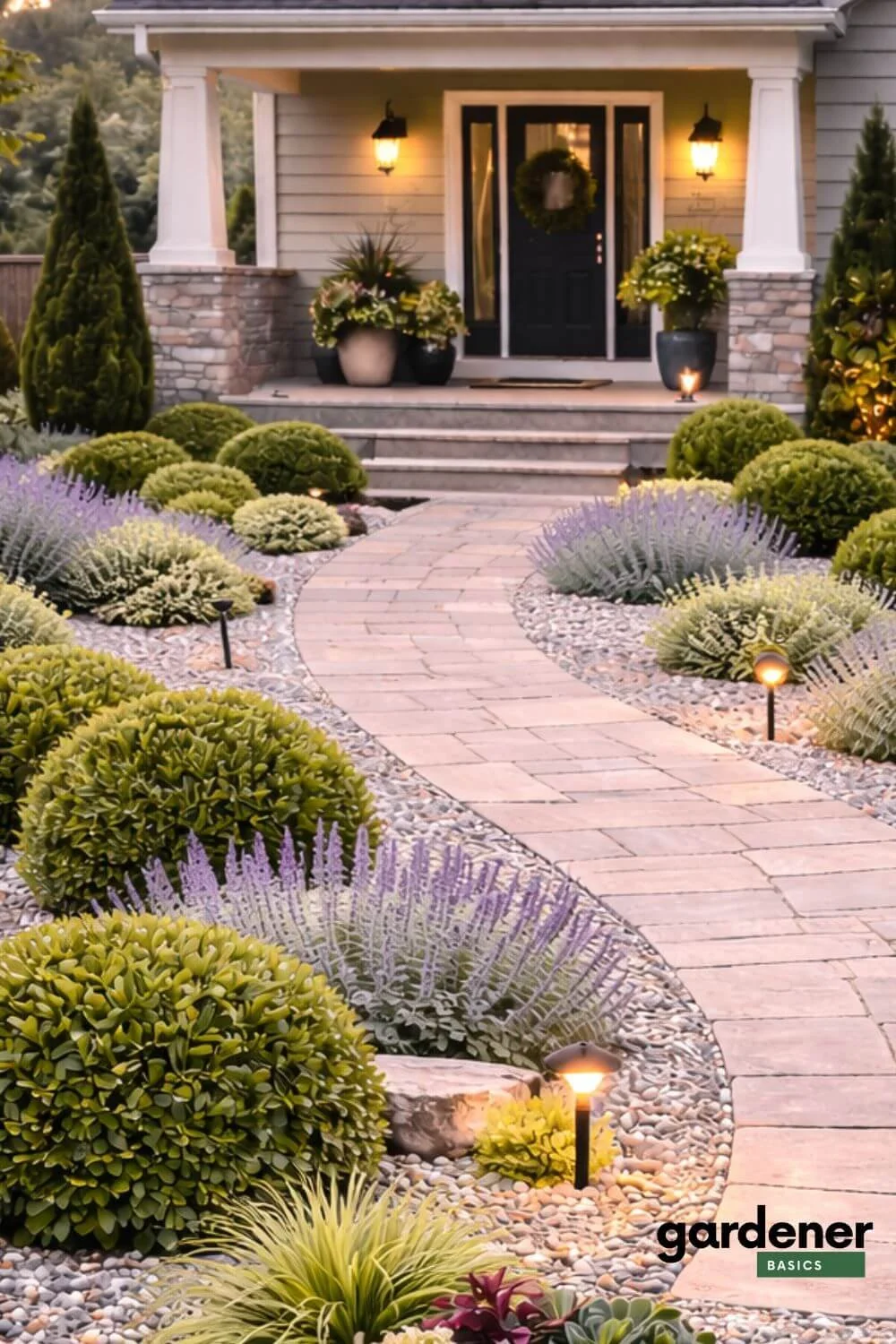
Here’s a visual of using gravel as negative space instead of grass.

Option 3: Groundcover Instead of Turf
If you still want green but don’t want mowing, groundcover can be a great compromise.
Creeping thyme, low sedum, creeping phlox — these soften the space without creating awkward mowing strips.
Just don’t think of groundcover as zero-maintenance.
It spreads. It fills in. It sometimes needs trimming back. It still requires intention.
But visually, it often looks far more deliberate than a stressed-out patch of turf squeezed into a tight yard.
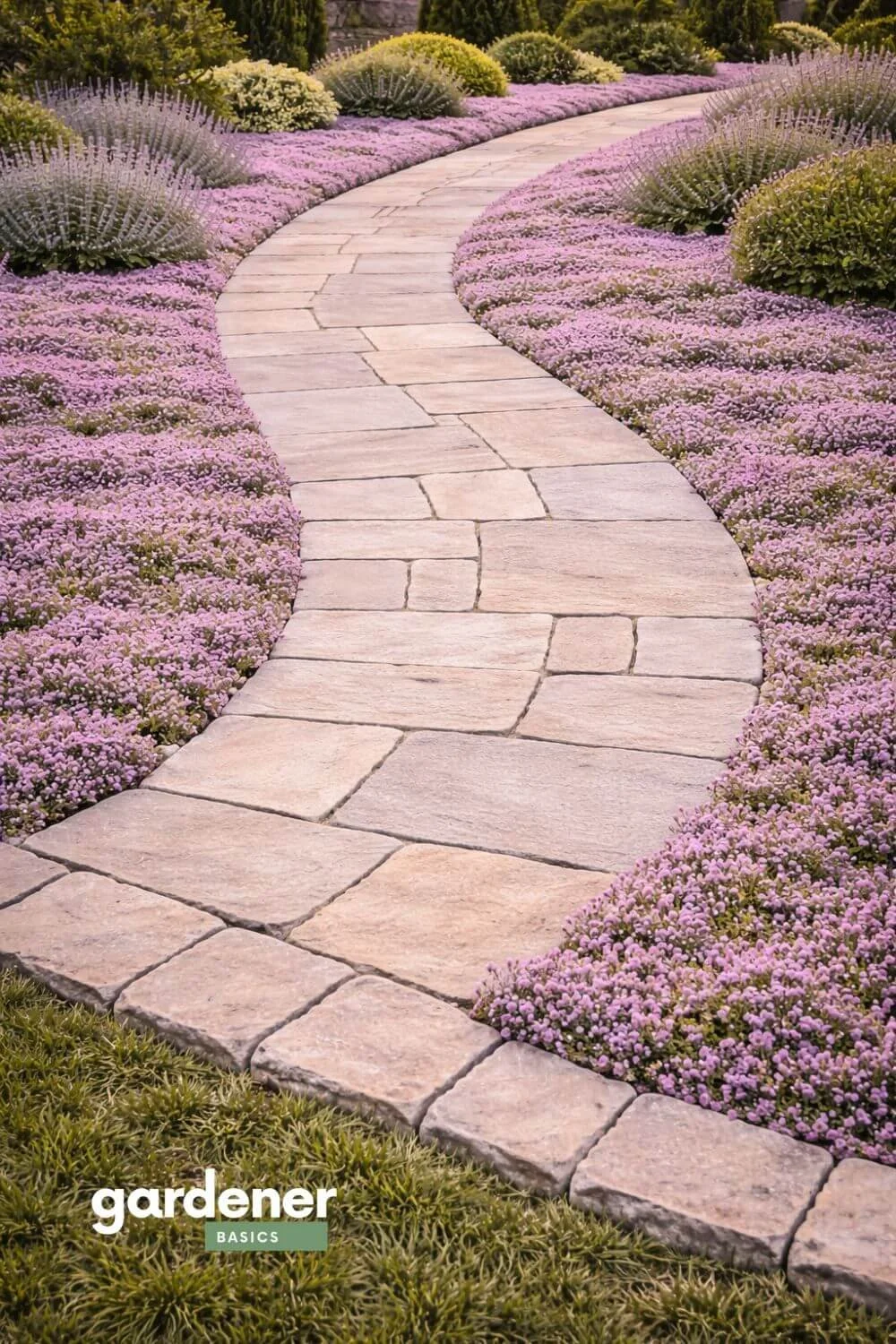
Here is a visual of what creeping thyme could look like instead of grass. It can be very beautiful since it adds a nice pop of color.
Cold Climate Considerations (Zone 6 Reality)
If you’re landscaping in Zone 6, removing lawn doesn’t mean ignoring winter.
In fact, winter becomes more important.
When you remove grass, you’re increasing visual intensity. That means you need evergreen structure to carry the yard through January and February.
If you’re not sure how to balance evergreen anchors with bloomers in a cold climate, I walk through that in Small Front Yard Landscaping for Zone 6.
A no-grass yard without winter structure will feel empty for months.
What I Wouldn’t Do
I wouldn’t:
Turn the entire yard into one giant mulch bed
Mix multiple types of stone and gravel
Remove grass and then add even more plant varieties
I’ve seen small no-grass yards that feel overwhelming because every square foot is filled with something different.
When you remove lawn, you need stronger decisions — not more decisions.
A Simple No-Grass Plan for a Small Front Yard
If you have a 12-foot-wide front yard space, a simple no-grass approach could look like:
Two evergreen anchors
Three repeating structure shrubs
One mid-layer plant repeated
Gravel or groundcover as negative space
A clearly defined edge
That’s it.
Not a rock garden experiment. Not a plant collection. Just structure and spacing.
The same principles still apply — even without turf.
The Bottom Line
Grass isn’t required for curb appeal.
Good decisions are.
When you focus on scale, repetition, evergreen structure, and clean edges, a small front yard without lawn can actually look more intentional than one with it.
Removing grass doesn’t solve design problems.
But thoughtful structure does.

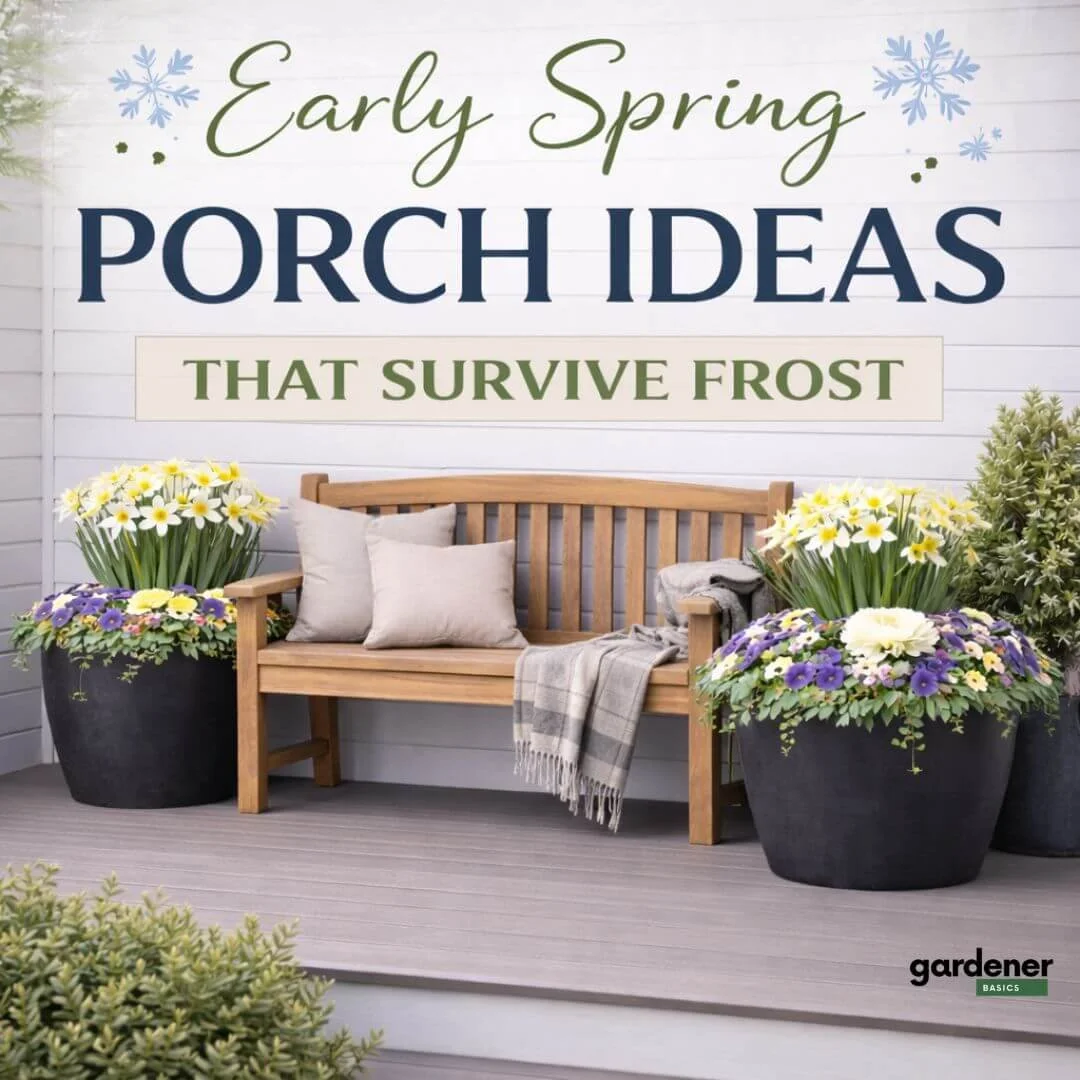

Spring porch planter recipes you can copy. Discover simple flower combinations for early and late spring that make your front porch feel intentional and elevated.