

Front Yard Landscaping Ideas for Home Gardens (Layout & Design Tips)
Most front yard landscaping advice falls into two extremes.
It’s either overly complicated with design language that makes you feel like you need a drafting table… or it’s a giant Pinterest list with 47 ideas and no real guidance.
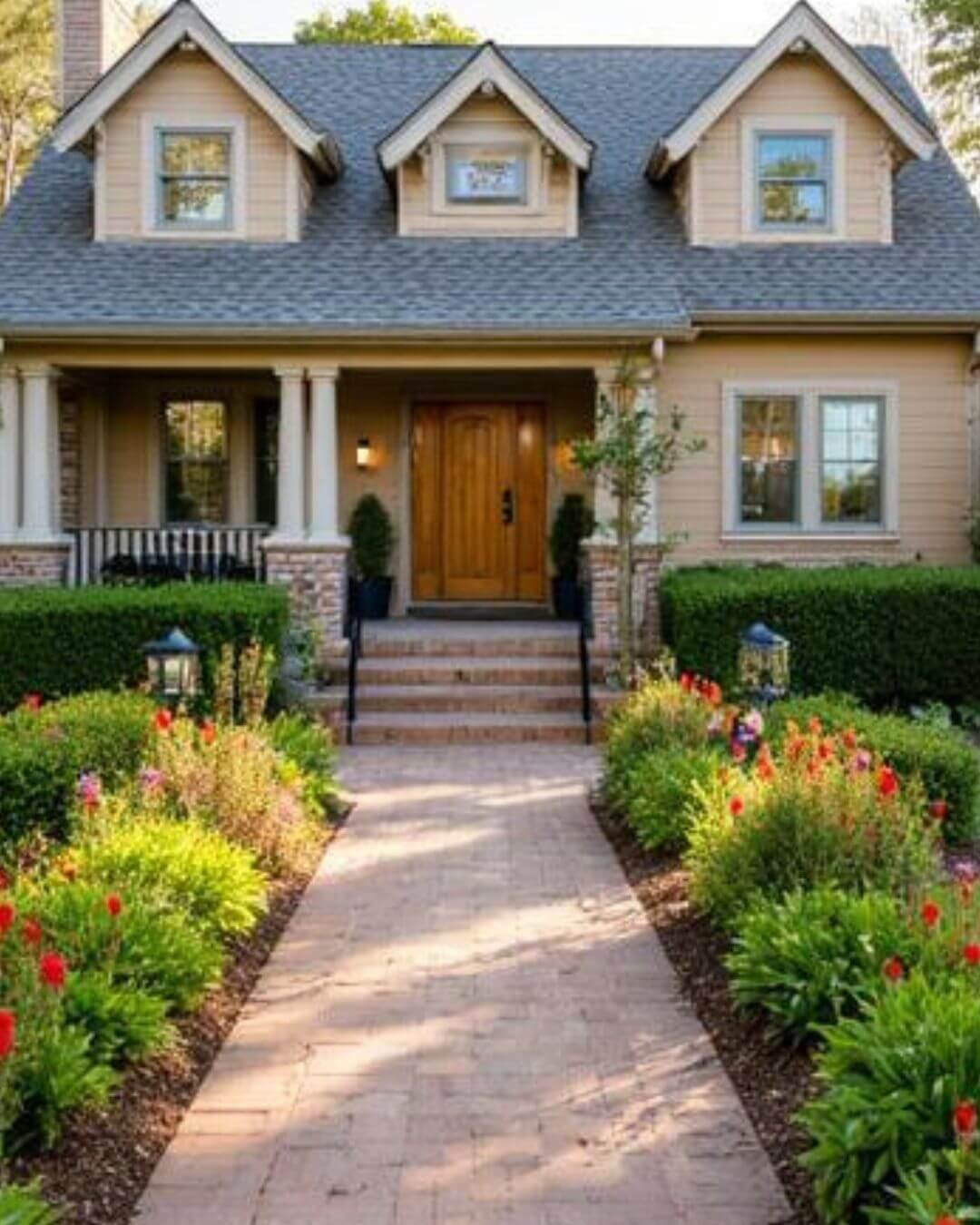
But most home gardens aren’t sprawling estates. They’re modest suburban lots with a foundation bed, a walkway, and maybe a strip of lawn that never quite looks right.
Front yard landscaping doesn’t need to be complicated.
It just needs structure.
Once you understand scale, spacing, and repetition, even a small front yard can look intentional — not random.
Let’s walk through what actually makes that happen.
The items listed are accompanied by affiliate links, meaning I earn a small commission if a purchase is made through my links. This has no impact on the cost to the consumer. I link to products this way whenever possible, and it has no bearing on the products I choose to review or recommend.
Table of Contents Hide
Start With Structure — Not Flowers
This is the biggest shift most homeowners need to make.
When people think “front yard,” they think blooms. Color. Something cheerful.
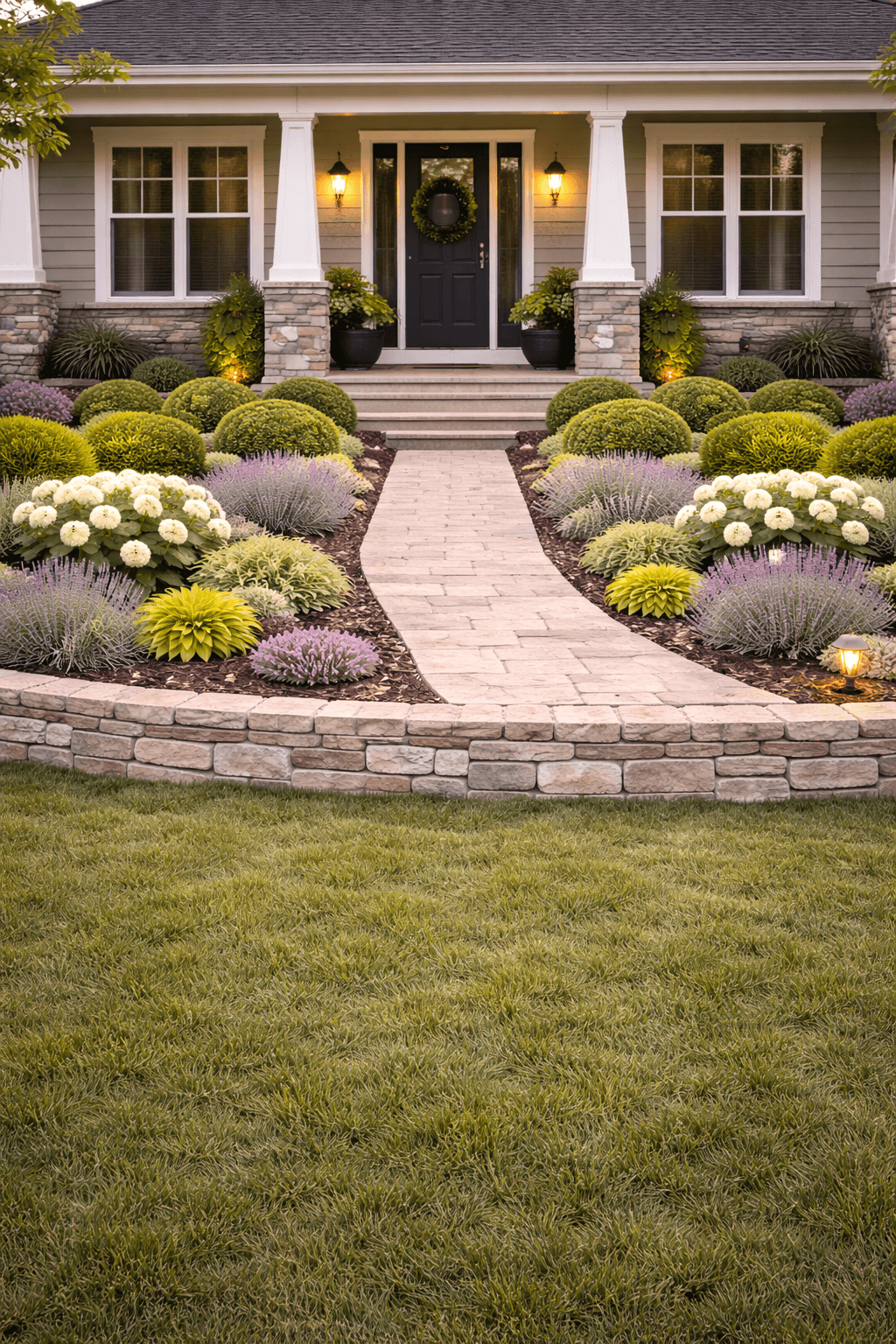
But the front yards that look the best in real neighborhoods — the ones that still look good in January — are built on structure first.
Strong anchors.
Repeating shrubs.
Clear proportions.
Defined edges.
Flowers are the bonus. Structure is the backbone.
If you’re starting from scratch or redesigning a small space, I’d begin with Small Front Yard Landscaping Layout (A Simple Formula That Works). That guide walks through exactly how to layer anchors, structure, and mid-level plants so the yard doesn’t feel crowded.
Once you understand the layout, everything else becomes easier.
Foundation Planting Done Right
This is where most front yards either shine or struggle.
I see this constantly: shrubs planted too close together because they looked small in the pot. Or tall evergreens shoved into shallow beds where they were never going to fit long term.
Scale matters more than variety.
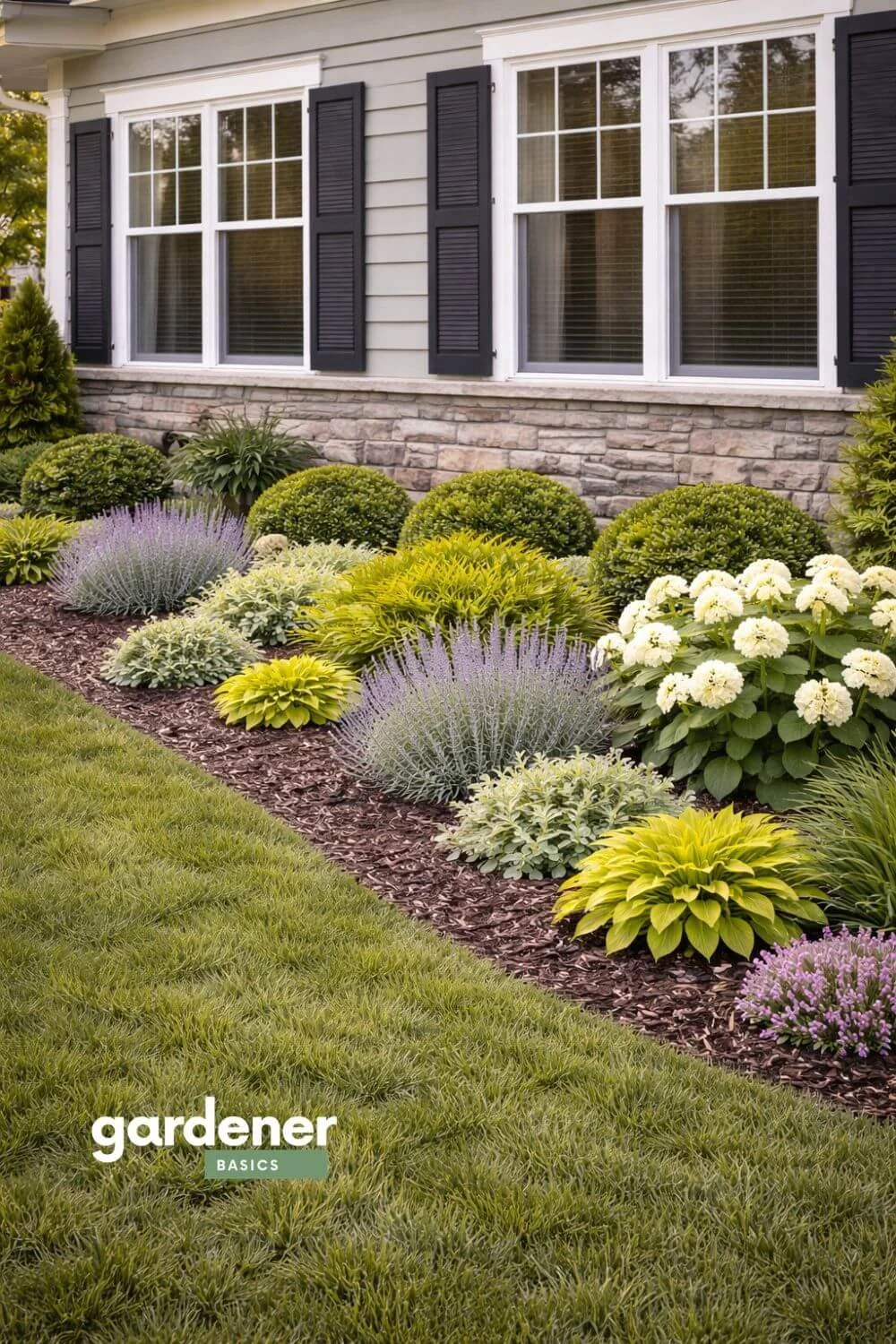
A simple rule I use is keeping foundation shrubs no taller than about two-thirds the height of the window trim. Once shrubs start creeping past the windows, the house begins to feel swallowed.
If you’ve ever looked at a house and thought, “Why does that feel heavy?” it’s usually this.
I break that down more specifically in The Foundation Planting Mistake I See Everywhere, because this is one of the most common design problems I see in front yards.
Spacing for mature size solves more problems than buying more plants ever will.
Small Front Yards Need Stronger Decisions
Small front yards don’t hide anything.
If something is too big, too busy, or too random, it shows immediately.
That’s why repetition matters so much.
When you plant one of everything in a tight space, it doesn’t look creative — it looks chaotic. If that sounds familiar, you’ll want to read 5 Small Front Yard Landscaping Mistakes That Make Your House Look Smaller, because most small-yard issues come back to spacing and scale.
Restraint is powerful in small spaces.
The goal isn’t more plants.
It’s better decisions.
Lawn Isn’t Always Helping
This might be slightly controversial, but in small front yards, grass often takes up the most space while adding the least impact.
A tiny rectangle of lawn can break up the yard visually and create awkward mowing strips that never look truly lush.
That’s why I often suggest either reducing lawn or designing around it more intentionally.
If you’re considering removing grass entirely, I walk through realistic options in No-Grass Small Front Yard Ideas (What to Do Instead of Lawn). Removing lawn can absolutely work — but only if the structure is strong enough to carry the space.
Grass isn’t required for curb appeal.
Structure is.
Cold Climates Change the Strategy (Zone 6 Reality)
If you live in Zone 6 like I do, winter exposes everything.
Front yards that were designed for June only look empty by January. Bare sticks. No evergreen anchors. No visual weight.
In colder climates, at least half of your structure should still exist after the leaves drop. That doesn’t mean everything needs to be evergreen — but enough of it should be.
If you’re landscaping in a cold climate, I break that down specifically in Small Front Yard Landscaping for Zone 6, including which shrubs perform reliably and how to balance bloom with winter structure.
If it looks good in January, it will look incredible in June.
Borders and Edges Finish the Space
You can have beautiful plants and still have a front yard that feels unfinished.
Usually it’s because there’s no defined edge.
No crisp mulch line.
No groundcover.
No transition between lawn and bed.
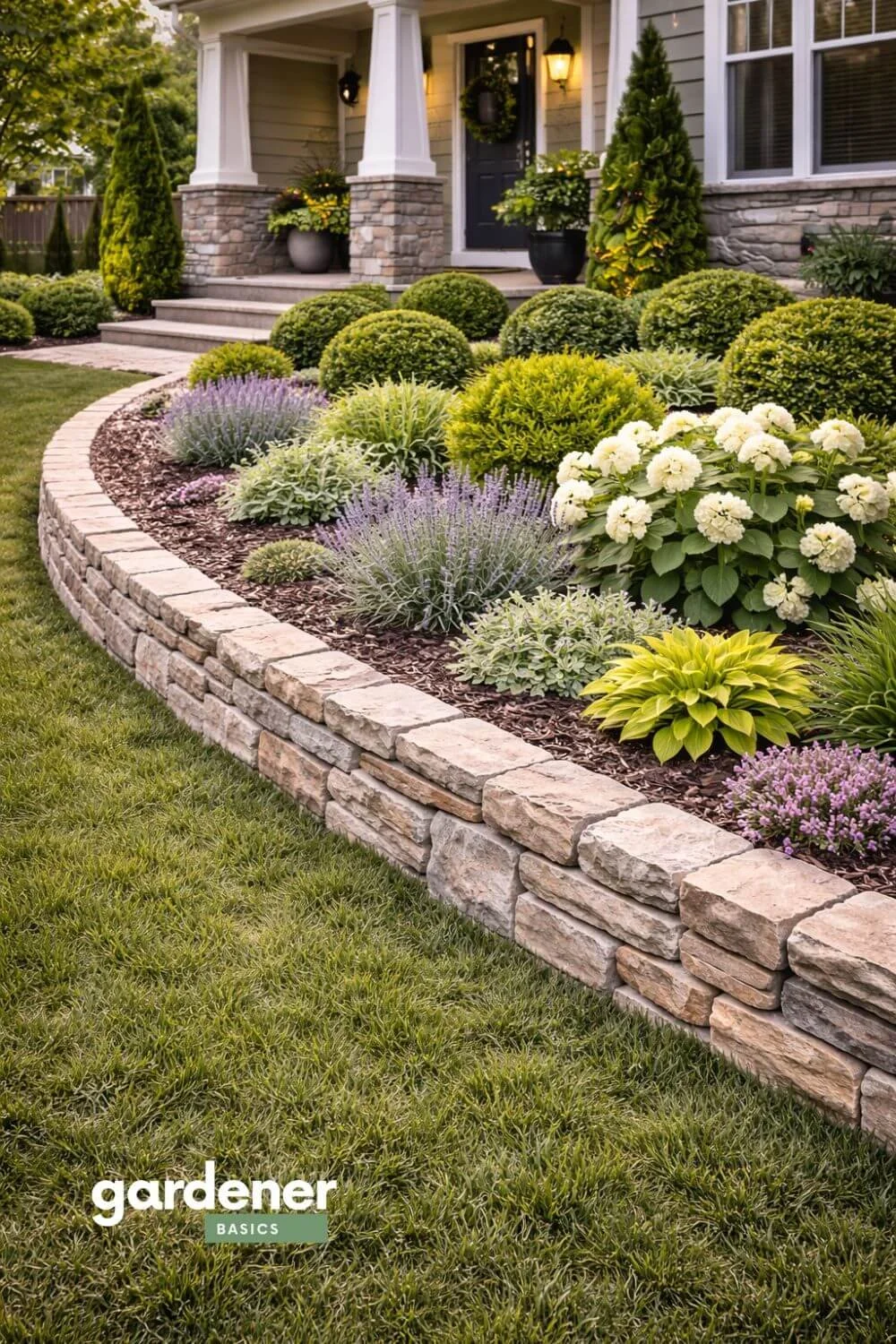
Edges frame the design. They tell your eye where the space begins and ends.
If you’re unsure what kind of edge works best for your home, I share practical options in Landscape Border Ideas That Beginners Will Love. It doesn’t have to be elaborate — it just has to be intentional.
That finishing detail changes everything.
Walkways and Fences Matter Too
Front yard landscaping doesn’t stop at the foundation.
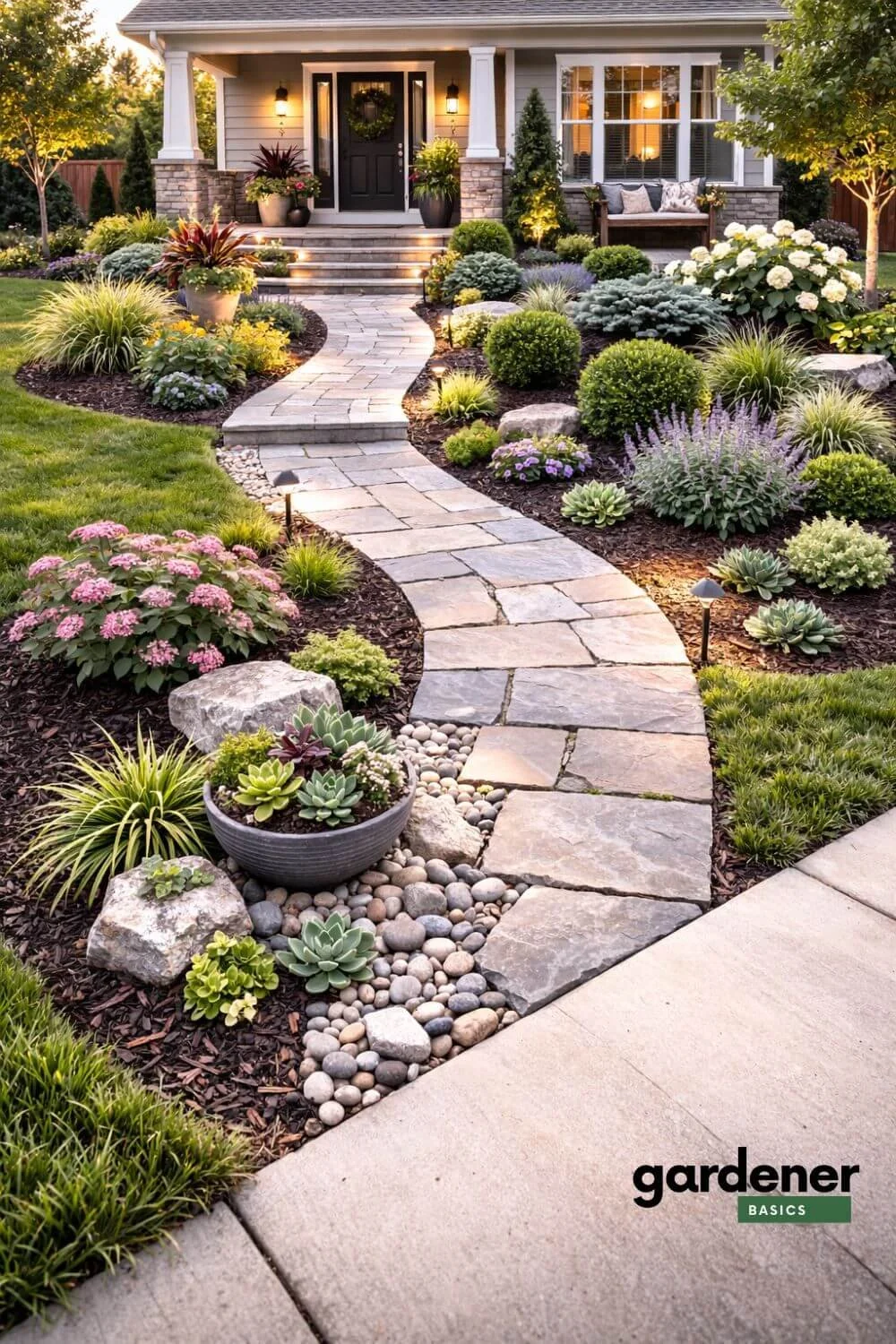
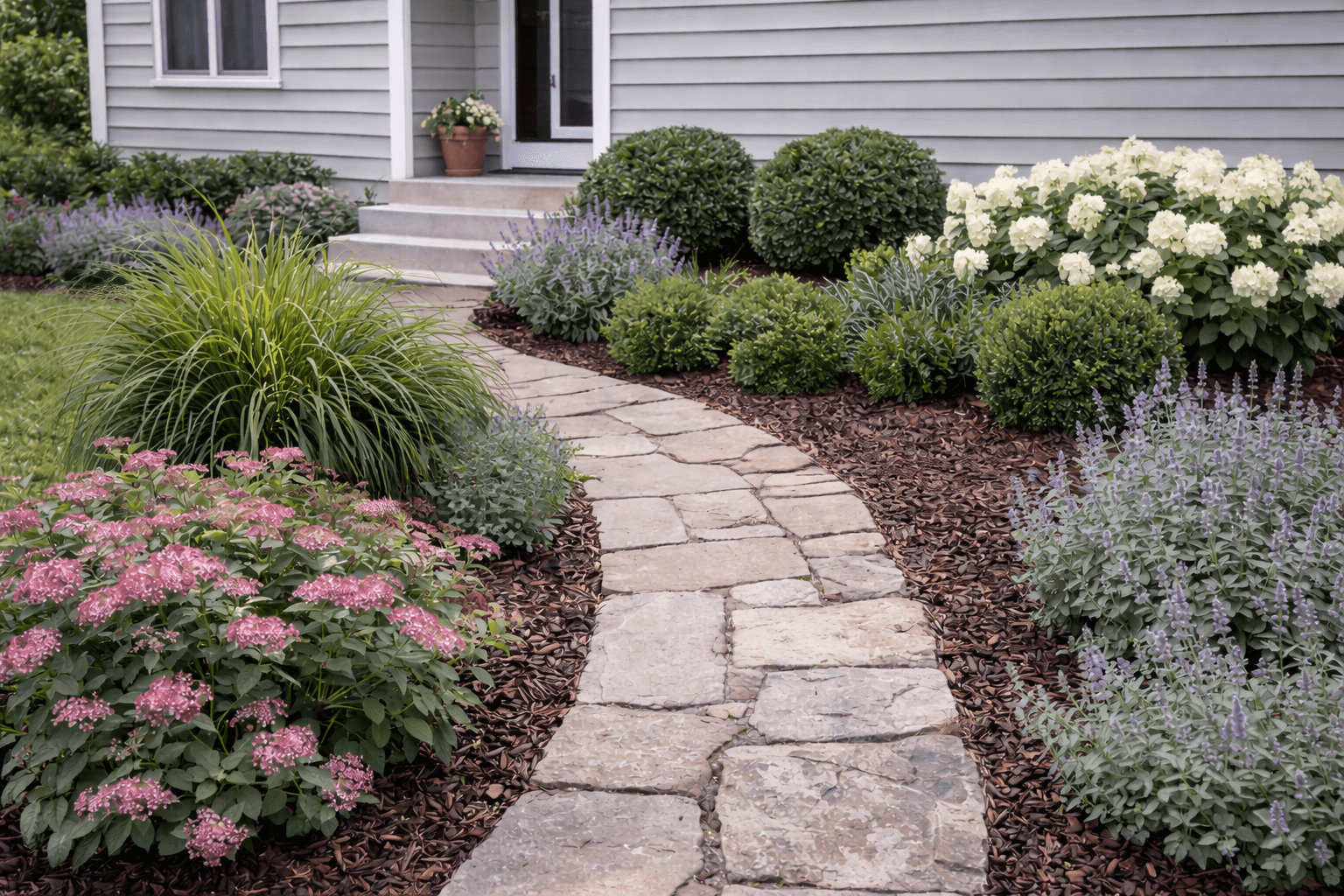
Walkways benefit from repetition. Fence lines need rhythm. Entry points should feel anchored instead of accidental.
If you’re landscaping along a fence, the same structure principles apply. I share layout ideas and plant suggestions in Landscaping Along a Fence: Easy Layouts + Best Plants.
Even small adjustments along a walkway can completely shift how a yard feels.

Choosing Plants That Won’t Outgrow the House
Plants grow. Houses don’t.
Front yards that age well usually rely on compact shrubs, dependable bloomers, and plants that don’t need constant resizing to stay in proportion.
If you want options that give strong impact without constant fussing, you’ll find reliable picks in Low-Effort, High-Impact: 15 Stunning Plants for the Busy Gardener.
Low maintenance doesn’t mean boring. It just means you’re not fighting your design every season.
Before You Plant Anything
Take ten minutes and measure.
Measure the width of your bed. Measure the depth from the house. Look at your window height. Check sun exposure. Look up mature size for every plant you’re considering.
It’s not glamorous.
But planning for full size is what separates a front yard that looks good for one year from one that looks good for ten.
I’ve learned that the hard way more than once.
The Bottom Line
Front yard landscaping isn’t about having more plants.
It’s about making stronger decisions.
When you focus on scale, spacing, repetition, evergreen structure, and clean edges, even a modest home garden can look intentional.
And intentional is what creates real curb appeal.
If you’re working with a smaller space, start with the layout guide. Once you understand the structure, everything else builds from there.

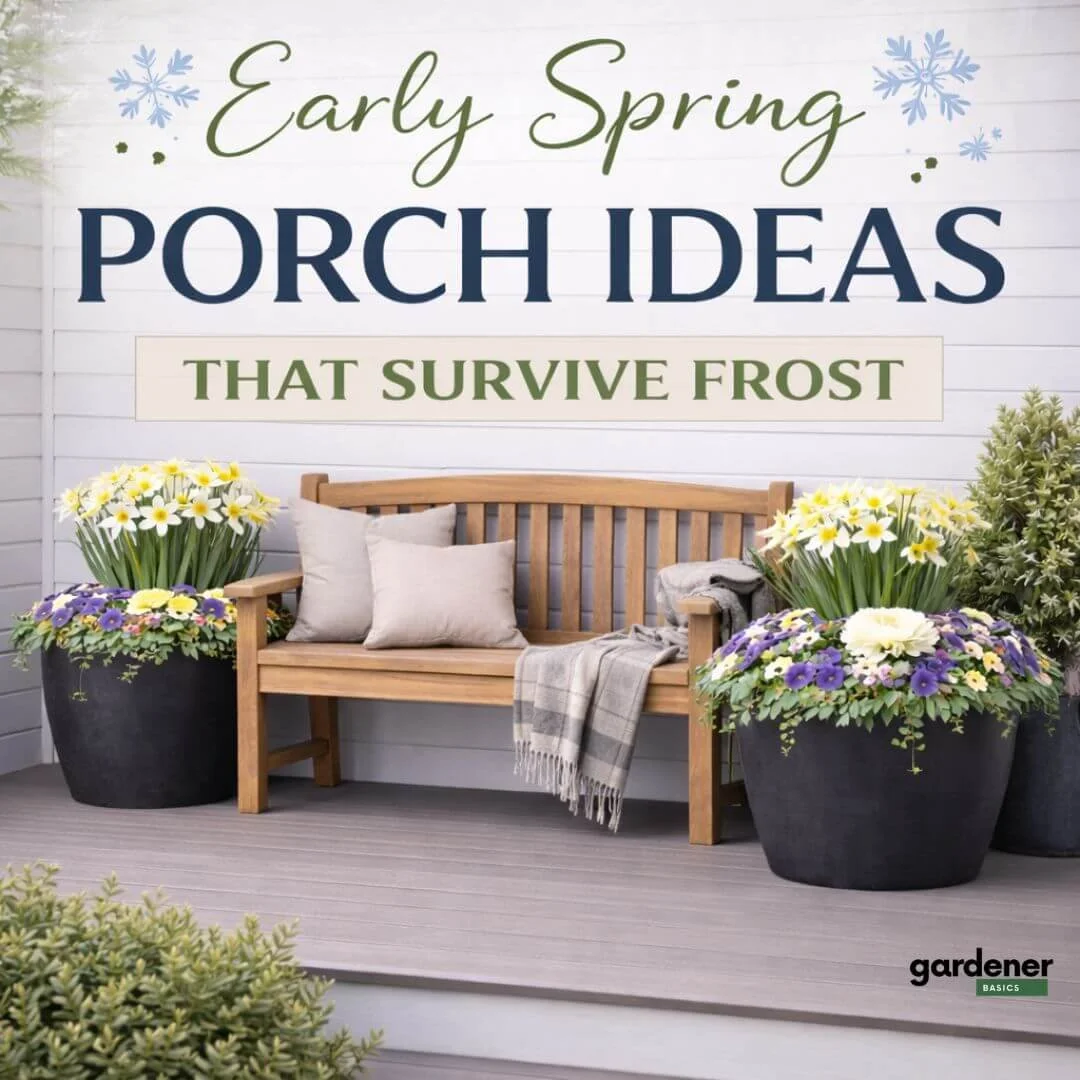

Spring porch planter recipes you can copy. Discover simple flower combinations for early and late spring that make your front porch feel intentional and elevated.