

5 Small Front Yard Landscaping Mistakes That Make Your House Look Smaller
Small front yards don’t give you much room to experiment.
In bigger yards, you can try things and adjust later. In a small front yard, one wrong shrub can swallow a window. One crowded bed can make the whole house feel tighter — even if the plants themselves are perfectly healthy.
And here’s what most people don’t realize: most small front yard problems aren’t plant problems.
They’re scale problems.
I see the same few mistakes over and over again walking through neighborhoods — especially in tighter suburban lots. If your front yard feels “off” but you can’t quite explain why, one of these is probably happening.
Let’s walk through them.
The items listed are accompanied by affiliate links, meaning I earn a small commission if a purchase is made through my links. This has no impact on the cost to the consumer. I link to products this way whenever possible, and it has no bearing on the products I choose to review or recommend.
1. Planting Shrubs Too Close Together (Because They “Look Small”)
This is the biggest one.
The shrubs look tiny in their nursery pots, so you space them a foot apart. It looks full right away. You feel productive. It feels done.
Fast forward two years.
Now they’re fused into one giant hedge blob.
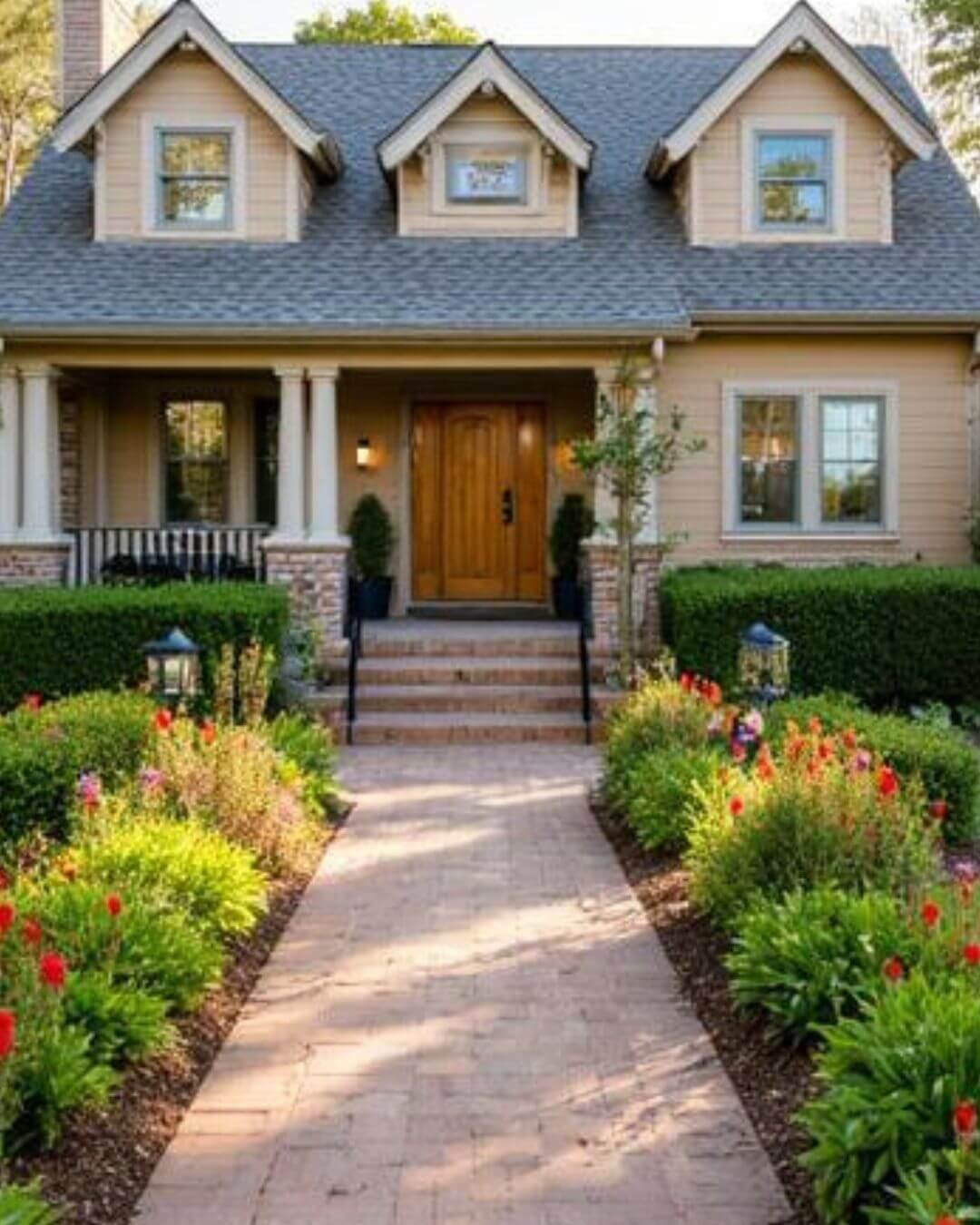
In small front yards, that blob effect makes the house look heavier and shorter. Windows lose definition. Corners disappear. Everything feels compressed.
The fix is simple, even if it feels uncomfortable at first: always plant for mature width.
If it grows 4 feet wide, space it 4 feet apart — measured from the center of each plant. Yes, it will look too spaced out at first. It always does. But that spacing is what prevents the overgrown hedge look you see everywhere.
If you want the full layout system that keeps this from happening in the first place, I walk through it step-by-step in Small Front Yard Landscaping Layout (A Simple Formula That Works).
Future-you will not enjoy digging things up.
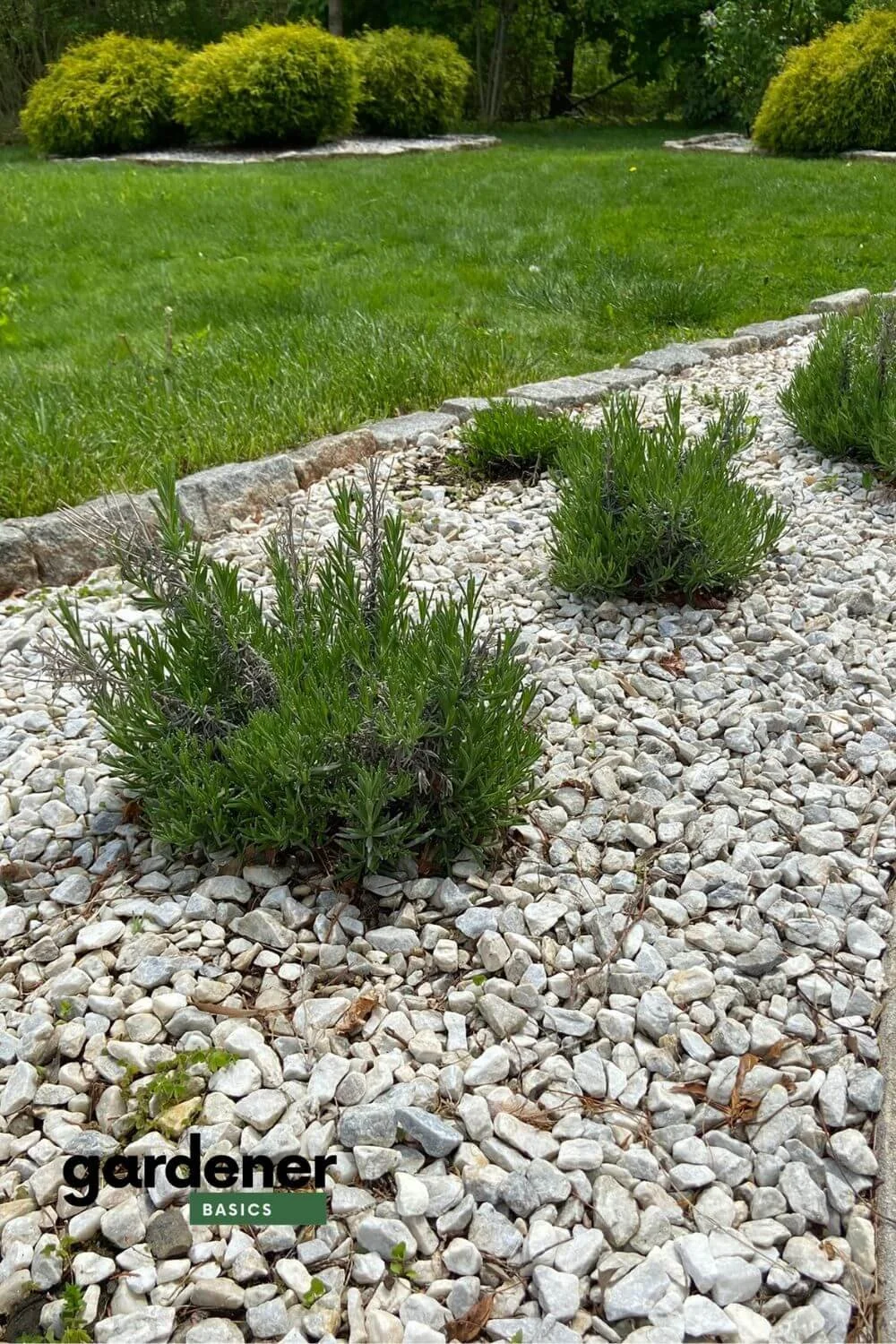
You need adequate spacing between plants so they can grow. I measured these plants from center to center when I planted them in the ground.
2. Using Shrubs That Outgrow the House
This one is incredibly common in Zone 6 neighborhoods.
Someone plants a shrub rated for 6–8 feet tall in front of a 4-foot window. At first, it looks fine. Then suddenly the windows disappear, the siding feels hidden, and the whole house looks shorter.
In small front yards, scale matters more than variety.
A simple rule I follow: try to keep foundation shrubs no taller than about two-thirds the height of your window trim. Once shrubs start creeping past the windows, the house begins to feel swallowed.
And skip tall column arborvitae right against the foundation unless you truly have depth. I can’t tell you how many times I see tall evergreens trying to live in a 3-foot-deep bed.
If this sounds familiar, you’ll want to read The Foundation Planting Mistake I See Everywhere, because this is almost always where things start going wrong.
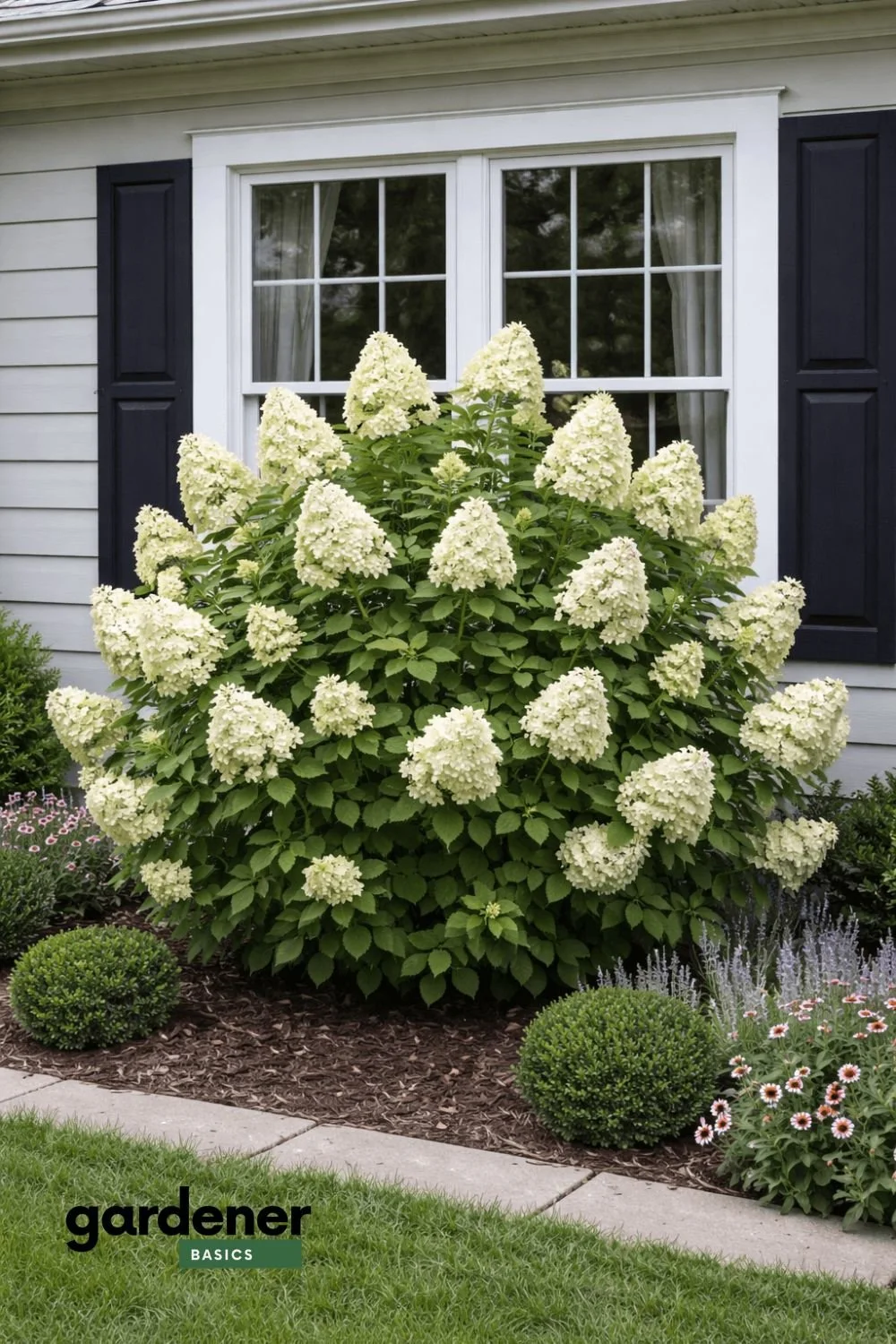
You don’t want to block the natural light by planting shrubs that are too big for their space.
3. Planting One of Everything
This one happens at the garden center.
Everything is blooming. Everything looks good. So you buy one of each. It feels creative in the moment — I get it. But small yards don’t reward creativity the way big cottage gardens do.
Then you plant it all… and the yard looks like a plant audition.
Small front yards magnify variety. When you mix too many shapes, colors, and heights in a tight space, it feels chaotic instead of charming.
The fix is restraint.
Pick one anchor. Pick one structure shrub. Pick one or two mid-layer plants. Repeat them.
Repetition is what makes a small yard feel intentional instead of crowded. If your yard currently feels busy, this is usually why.

4. Ignoring the Edge
This one is subtle but powerful.
You can have beautiful shrubs and still have the bed look unfinished if there’s no defined edge. No border, no groundcover, no clean mulch line — the plants just fade into lawn.
It feels 90% done.
A defined edge gives your eye a stopping point. It frames everything.
That could be low groundcover, a crisp mulch line, steel edging, or simple stone. It doesn’t have to be elaborate — it just has to be intentional.
If you need practical ideas that don’t feel fussy or overdesigned, I share realistic examples in Landscape Border Ideas That Beginners Will Love.
That finishing line changes more than people expect.
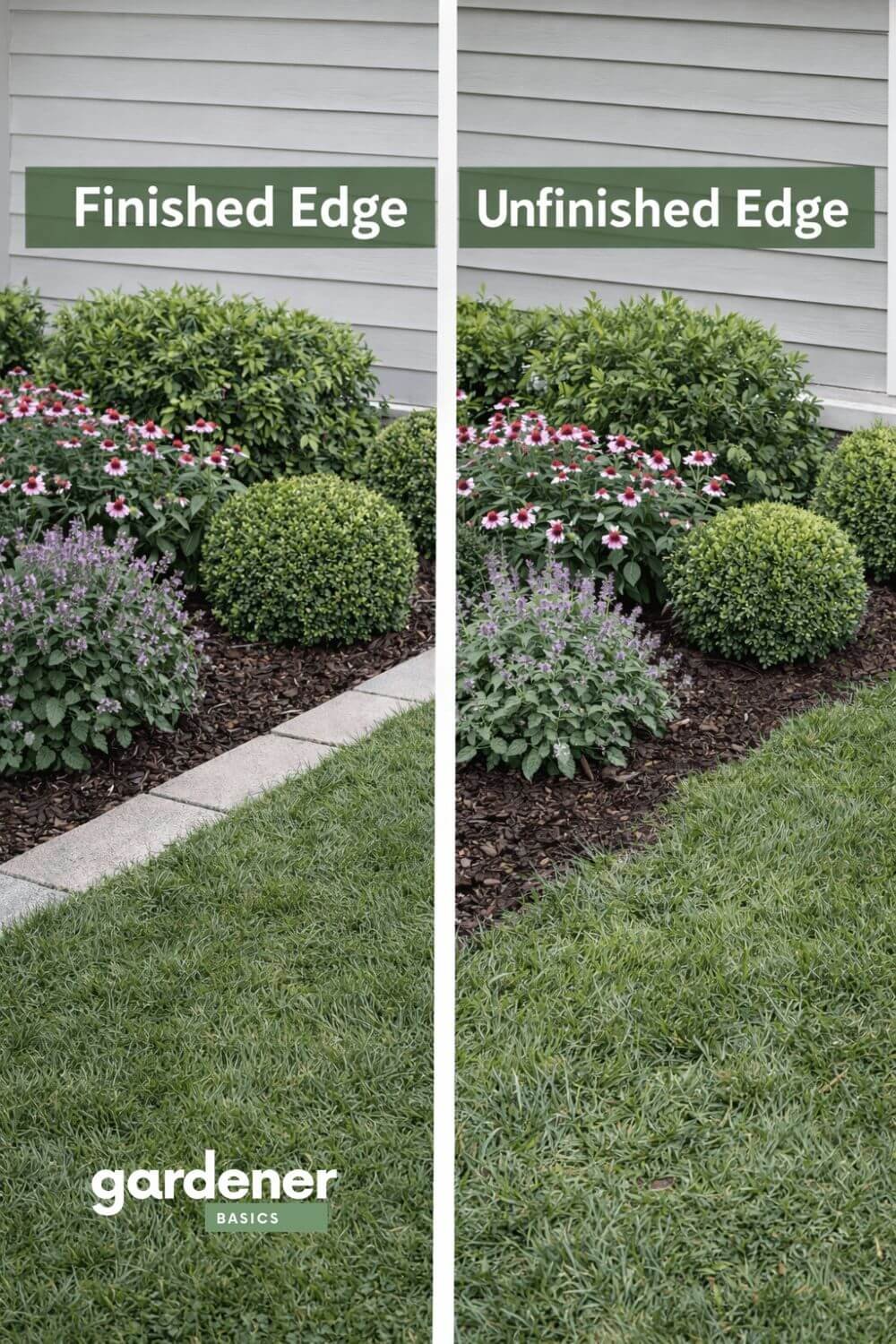
An edge makes such a difference!
5. Designing for Summer Only
If you live in Zone 6 like I do, you know winter is not a small detail.
But I still see small front yards designed entirely for June — all deciduous shrubs, all perennials, nothing evergreen. Then January hits, and the whole yard turns into bare sticks.
In a small space, winter emptiness feels even more noticeable because there’s nowhere else for your eye to land.
Make sure at least half of your structure is evergreen. Your front yard should look decent in January — not just spectacular in July.
If you’re in a colder climate and not sure how to balance structure with bloom, I break that down specifically in Small Front Yard Landscaping for Zone 6.
Design for winter first. Summer will take care of itself.
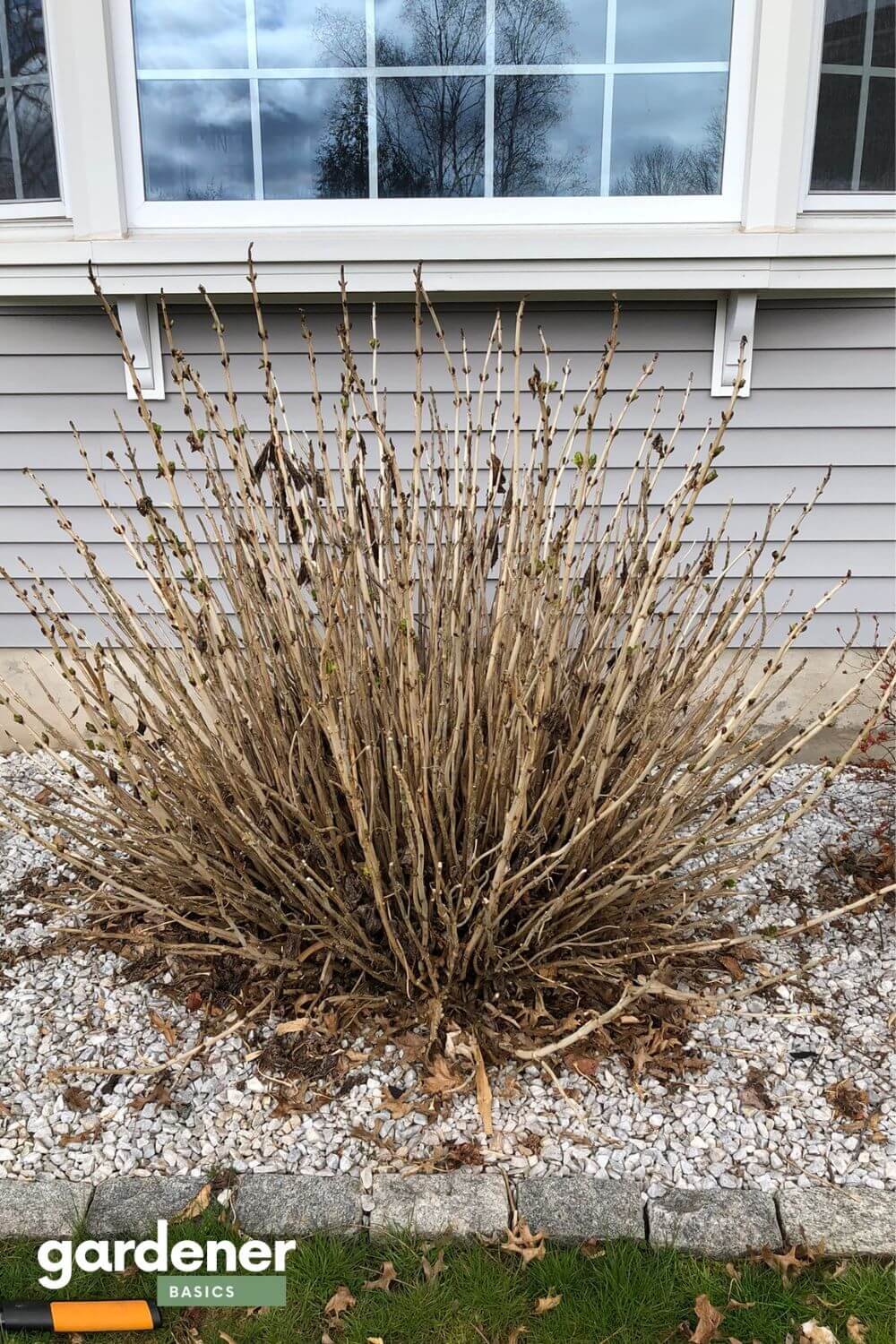
Hydrangeas are lovely in summer but remember this is what they look like in winter. You can still have them but you also need some evergreens as well.
What Actually Makes a Small Front Yard Look Bigger
It’s not more plants. It’s not more color.
Most small front yard problems aren’t plant problems — they’re spacing and scale problems. I’ve learned that the hard way more than once.
If your front yard feels crowded or heavy, it probably doesn’t need more plants. It needs fewer, spaced properly.
And once you fix scale, everything changes.



Spring porch planter recipes you can copy. Discover simple flower combinations for early and late spring that make your front porch feel intentional and elevated.